
A Literary Journal
Self-Portrait with Beach Ball
Sometimes she seems like another girl, lying
in the paper gown with her ass hanging out
and her legs in the stirrups.
In my first-person memory, I’m nothing
but head, no body, eyes struggling to focus
on the haphazard job someone has done
taping a cut-out magazine picture to the ceiling:
beach ball, two palms, flat lip
of the ocean. Not square to the table,
I imagine someone short like me
must have hung it, standing on her toes
with the tape-bits hanging off her fingers
like hangnails or wings. Her feet
where my head is. It wasn’t a big thing,
my wondering now is more thought
than she put in to it, quick diagonal taping
at each corner, then onward.
Here, there’s always another girl
who needs something. And who here
would speak up to say the picture is crooked?
Who here can speak?
After the Fentanyl I wanted to crack jokes
but I couldn’t stop crying. The nurse said
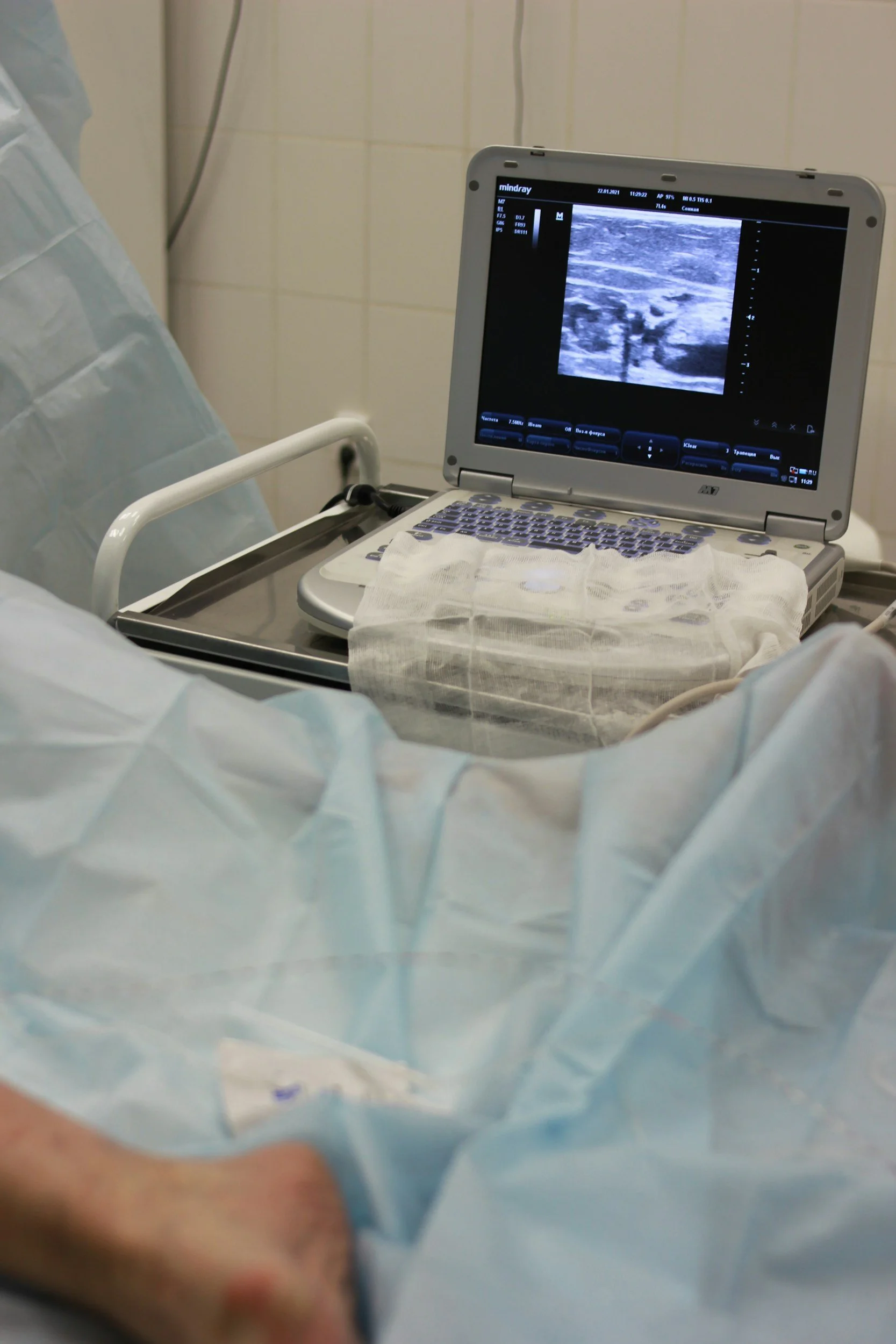
I could look at the sonogram but her eyes
told me not to. The greased microphone
of the instrument gave voice to nothing,
and the doctor spoke in a murmur
and there was no wail or crescendo
as ____ slipped out of me,
I felt slippery as plastic. After,
I sipped juice from a paper cup
and bled onto a thick wad of cotton
and I was no longer outside, looking in
at myself. I was once again stuck
in my body, my body alone and lonely,
at the end of one thing,
and the start of something else.
REBECCA BORNSTEIN
Rebecca Bornstein is a poet and worker who’s held many jobs—including production cook, elementary school secretary, and creative writing instructor. She is the recipient of an Oregon Literary Fellowship and the Adirondack Center for Writing’s Anne LaBastille Memorial Writing Residency. Her poetry has appeared in Puerto del Sol, Rogue Agent, Tinderbox Poetry Journal, The Baltimore Review, and The Journal, among other publications.