
A Literary Journal
Displace(ment)
Soon enough, we’ll feel waves
pushed landward by the far-off
cruise ship (that still looks close
enough to run aground). The space
it takes up forcing the bay
out of place—filling the horizon
spined already by cranes
on the bridge span. Our skins crawl
with newborn crabs wriggling
around for purchase. Even the tern’s
slap on the surface makes a ripple.
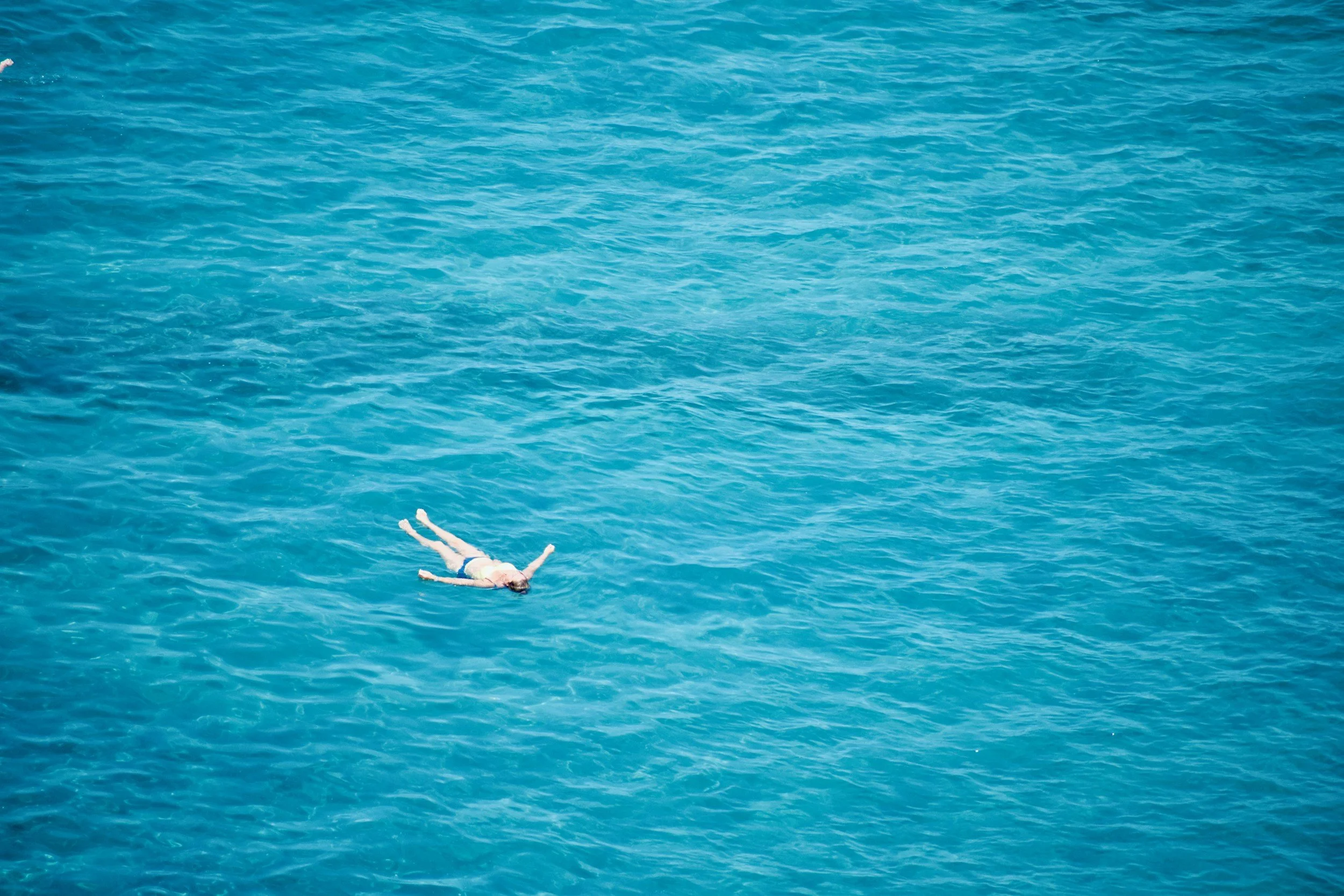
But I don’t—chest-deep, looking
seaward, nothing to do but float.
Nothing to do but float
and ponder, the mathematician
draws a bath. The problem simple:
fraud and complex: showing proof.
Bathwater cool, an ablution.
His entry overflows the edges
with his weight, watches the water
make space for him. Eureka.
We know our gravity by what
we force away. A gold crown,
a nude dash—this is half the story.
These days, it’s not extraordinary
to know what forces buoy us..
Knowing what forces buoy us,,
but unable to apply physics to life,
the girl sinks within crowded hallways.
She may as well be part of the floor:
no space for her, and she demands none.
Around her, heads bob to music
pumped through headphones, hands hold
hands, books, keys, gum. She comes
only for the learning, letters validating
the air she takes up. Giggles echo
at the width of her shadow.
Her eyes fix down. She thinks,
but I get so little room.
We get so little room
on such a large planet.
Man demands his acreage,
the goose a rock pile to nest.
Both are full of shit.
Houses circle the lake dug
into marshland, miles from the site
of the settlers’ landing, each lot
fenced in a square. Droppings
coat the path: a foul claim staked.
No bare inch. Cities build upward,
stack humans. We’ve run out of space.
What other mess could we make?
The mess we’ve yet to make
won’t come in bags of crushed cups
or apple peels, handleless mugs
or orphaned Barbie shoes or
bottles, labels white from exposure,
nor the scum-choked ponds by freeways
or land sliced away like cake to hold
cubes of waste. No, it’s the fragmentation,
like plastics sloughed from clothes
in the washer: they infiltrate
and stick unseen, unable to be budged.
Not the rusting we see on iron,
but rot inside wood before it gives way.
Rotting inside, wood about to give way,
boats that barely pass for boats
set sail carrying exiles, walkers across
sand and mountain and waste.
Lines to wait in cost lives, so they pay
and board and hold their breaths
across the seas. On the shorelines,
towels prism across hot sand
as swimmers bob in the blue.
Each looks past the other,
focused on the horizon or sun
or water’s gasoline rainbows.
But soon enough, we’ll all feel the waves.
JOCELYN HEATH
Jocelyn Heath is an associate professor in English at Norfolk State University in Virginia. Her first poetry collection, In the Cosmic Fugue, came out from Kelsay Books in 2022. Other creative writing has appeared in The Atlantic, Crab Orchard Review, Poet Lore, Sinister Wisdom, Flyway: Journal of Writing & Environment, and Fourth River. She is an assistant editor for Smartish Pace.