
A Literary Journal
The Hanger
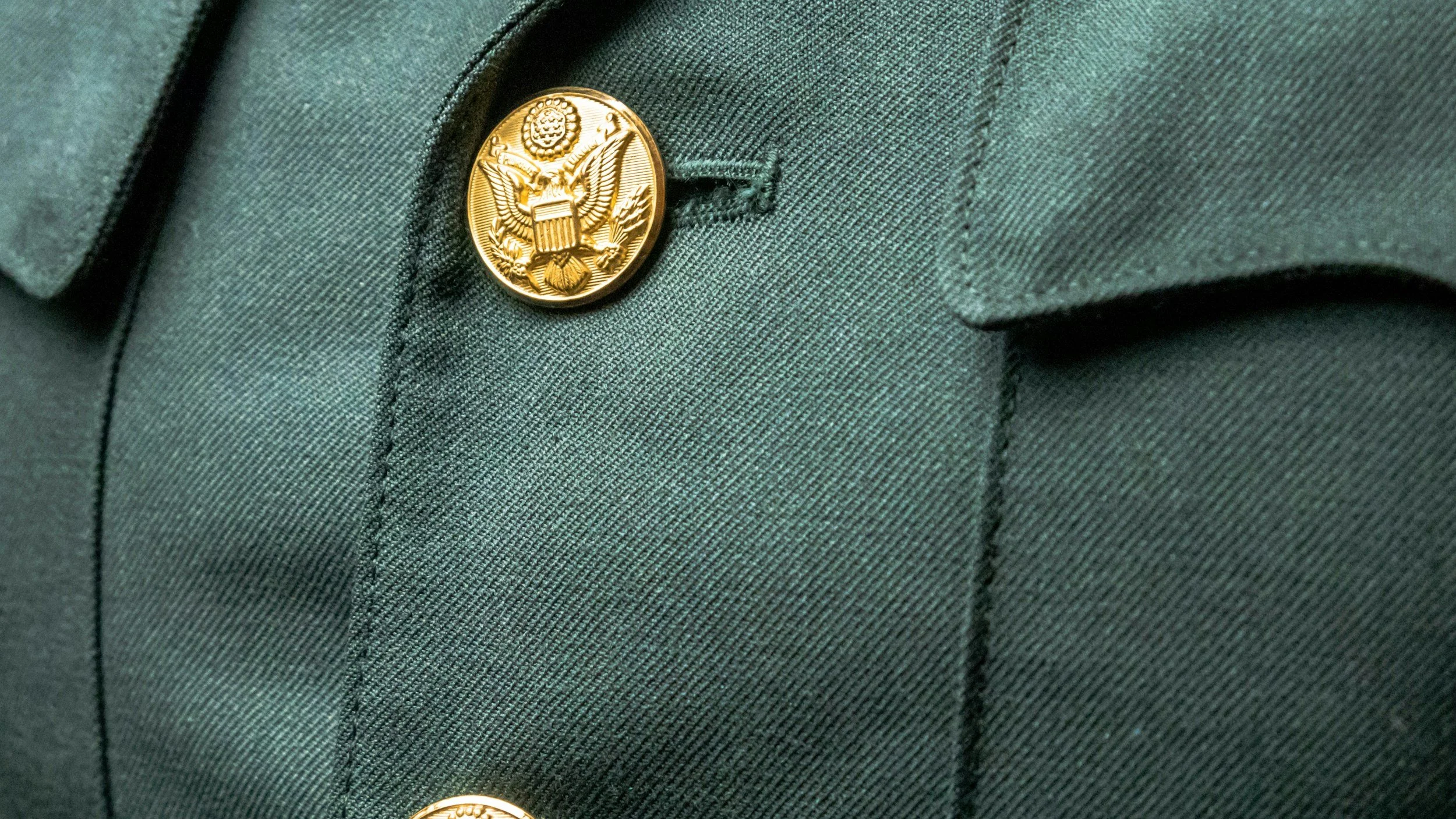
One afternoon, my grandfather draped an old uniform coat over my shoulders and sent me to parade through the living room for my mother and grandmother. Ten-year-old me thought it would impress them. That they’d clap. Compliment my marching. Maybe take pictures. But it only sparked another argument. Crying, my mother demanded I take it off, which I would’ve happily done, as the coat proved heavy and itchy, but Grandpa wouldn’t hear of it. Didn’t want her raising his grandson to become some coward or commie. Certainly not while we were still living under his roof.
“What happened to Eddie not enough?” Mama asked, yanking at my frayed sleeve. “Have to start all this again with my son?”
Grandpa scoffed, buttoning up the coat, sealing me in. “This boy here’s goin’ to be somebody someday. ’Less you spoil that good future right out of him.”
“I don’t want him wearing Eddie’s uniform.”
“Better’n ’em ol’ work boots his no-good daddy left him.”
I glanced down at the ramshackle boots I hadn’t taken off in what felt like months. Torn seams, peeling soles, wobbly right heel from the night Papa kicked a hole in the kitchen wall. They were sitting by the porch steps on the morning he finally decided marriage and parenthood weren’t for him, and I’d been clunking around in them ever since. Mama tried to toss them out several times, but, somehow, they always ended up back on my feet.
“Careful, or the boy’s goin’ to turn out just like him,” Grandpa said, picking lint off my lapel. “Weak and worthless.”
A few months later, he kicked us out.
Mama’s friends took us in for a while, though we never stayed in one place long. Sometimes we’d end up at the shelter or spend a night under an overpass when they didn’t have any beds available. Maybe huddled in a shop doorway. Despite her earlier concerns, Mama eventually just let me keep the uniform coat and boots, as they at least kept me warm. When I had trouble sleeping, she’d tell me about my Uncle Eddie, how she remembered him being so proud of that coat before heading overseas, how he came back a different person, how much she missed him and wished she could change what happened. Often, I’d also ask about Papa and whether he ever needed his boots, but Mama would assure me they were mine to keep.
Years later, Mama finally found steady work and moved us into a small apartment. By then, I’d collected quite the wardrobe: a perforated knit hat from the church people who smiled, said they’d pray for us, and told Mama she’d burn for her sins; mismatched socks from a family friend, who suggested I go off to military school and learn how to stand erect, put my heels together, say “yes, sir,” and salute; leather gloves from Jake, Mama’s ex-boyfriend, who once broke her wrist and insisted she put me in foster care before he’d marry her.
“Not on your life! I’m not about to raise another man’s child,” he said, shoveling meatloaf into his mouth at the supper table. Vacations, a real house, as many of his babies as she could want. He promised to give her a better life but only if they started fresh and unencumbered. Mama refused, and I began wearing his gloves the day we left, when he chased us in his pickup and tried to run us off the road. It’s not that I really wanted those gloves—they were too big and bloodstained—but they stuck to my hands, refused to come off, no matter how hard I pried and pulled. Eventually, I forgot what my hands looked like without them.
When I got older, people always asked Mama why I wore all those clothes, especially in the summer heat. Of course, I wasn’t the only one slogging about in someone else’s attire. Most of my friends had their own: Abby wore sneakers two sizes too big, which she’d inherited after her older sister vanished one summer night; Mike had his mother’s watch, which hadn’t worked since he found her blue and motionless on her bedroom floor; Jesse’s ballcap always hid his eyes and had once belonged to his father, and everyone in town knew what happened to him. No one seemed to notice or care what they wore, but Mama decided I should see someone when I nearly fainted on the school bus.
The therapist pledged to figure me out, though only if Mama’s insurance company kept approving our sessions. Mostly he’d just sit there, pretend to listen, draw doodles of women’s legs, and wait for his turn to talk. One evening, probably to impress my mother, he grabbed my foot and tried to yank off one of Papa’s boots, but it wouldn’t budge. Next, he wrestled with a glove, but it proved just as stubborn.
“What are you playing at, young man? Some kind of a game?” he demanded. He paced his leathered office, hiking up his sinking slacks. Maroon socks as long as ladies’ stockings bunched up over his ankles.
Determined to prove himself, the therapist tugged at my uniform coat and managed to pull it down off my shoulders, but there was nothing underneath. Just space. Hollow. Empty as the cupboards of an abandoned house. Harrumphing, he jerked the coat back into place, told my mother I’d one day grow out of it, collected his co-pay, and pulled up his socks.
I took everything with me when I finally moved out on my own at eighteen, and I kept expanding my wardrobe through my twenties, even after I met Heather. When I slugged a man for shoving past me in a bar, the gloves and coat developed some nasty tears, but I taped them up. I even started wearing the guy’s glasses despite their cracked lenses. Heather begged me to take them off and throw them away, promising to buy me a new pair, but then we discovered they were glued to my face.
Months later, when Mama died, I added the flat cap she’d taken from Grandpa to my ensemble but didn’t want to attend the funeral.
“Seems like you should be there,” Heather said, lying beside me in bed, fingers fidgeting with my coat buttons. “I’ll go with you. If that’ll help.”
But the knit hat and flat cap had slipped down over my ears and I couldn’t hear her well. So I grunted like Grandpa and caressed Heather’s face with gloved hands and stayed awake deep into the blue night and choked beneath the weight of my clothes. Eventually, when she’d fallen asleep, I slipped from the bed into the closet and quietly but frantically tried undressing. When that failed, I ripped down all of Heather’s clothes from their hangers and shelves. The sun dresses her grandmother gave her. That beret she begged me to buy for our trip overseas that never happened. Flung her shoes out the door. Stomped into the bathroom and scattered her mascaras and lipsticks and hair clips all over the floor. Punched the medicine cabinet mirror and shattered it. Black tar blood oozed out from beneath my gloves and dripped across the tile floor like old motor oil.
“What’s wrong with you?” she screamed, rushing to the bathroom door in the t-shirt nightgown she’d gotten from an old boyfriend. Weeping, she pleaded with me to stop, but the knit hat and flat cap muffled my hearing.
The next morning, after I apologized, she began wearing my cracked eyeglasses, which she’d somehow yanked free from my face during the night. We both pretended nothing had changed. We ignored her new habit of stumbling over objects in her path, her difficulty recognizing friends she met on the street.
We never did make it to that funeral.
When Heather got pregnant following the New Year, I went out and bought a new overcoat to wear on top of my other clothes, hoping it would at least hide everything while we readied the apartment for the baby. Gifts poured in:
Yellow jumpers from my coworkers.
An old-fashioned bonnet from the neighbors.
A tiny pair of sneakers from Heather’s brother, who’d just been paroled.
But I soon noticed other items in the nursery that seemed to come out of nowhere, including little torn mittens and a small sailor cap.
“When did we get this?” I asked Heather, fiddling with the cap.
She smiled and shrugged, focused on folding all the new outfits. “I thought it was yours. Like from when you were a baby.”
Dismissing the mystery, I kissed her temple and felt her belly. Even through my gloved hands, I could feel the baby kick. We spent the afternoon discussing wallpaper, furniture arrangements, names. If it was a girl, I suggested we name her after Heather’s grandmother, if a boy, after my Uncle Eddie, and she agreed. But I secretly wondered if I could really be the father this baby would need, especially when all my clothes made things so difficult.
“You’ll make a great daddy,” Heather said, sensing my doubts, but her confidence only made me more anxious.
I never got to find out if she was right.
The doctor said these things happen.
Heather didn’t get out of bed for two weeks, and, even when she finally did, she refused to wear anything but my cracked glasses and the maternity pajamas her mother gave her. While I wanted to help her, to talk it out with her, to cry with her, I’d wrapped a winter scarf around my face that made it impossible. When she sat with me at last one evening, eyes red, I could do little but stare and blink.
“Say something,” she whispered, trembling.
Sweating, suffocating, I mumbled something.
Heather grabbed at my scarf and knit hat, fighting in vain to wrench them from my face. “At least say something!”
Fumbling for her hand, I again tried to speak, but nothing clear came out. Cursing, wearing my cracked glasses and pulling on a coat I’d never seen, she left.
Summoning whatever strength was left in me, I roared and dug my fingers into the scarf and tried to rip it away, but failed. I did the same to my flat cap and knit hat, to Papa’s boots, to the mismatched socks and Jake’s gloves. To Uncle Eddie’s uniform coat Grandpa had given me. I screamed and pulled. Cloth tore like muscle. Buttons popped like ligaments. But the result was the same.
Alone, I sat there for what felt like weeks. Unable to stand. Unable to move. Unable to breathe or talk or weep or see one inch of my own skin. The apartment was so quiet. I hadn’t become all those things Grandpa worried I might, but I’d certainly become somebody. Something.
TRAVIS KOLL
Travis Koll is an English professor and the author of the books Better Writing: Beyond Periods and Commas and The Sultan. Besides writing, he enjoys martial arts, cooking, and spending time with his wife and son.