
A Literary Journal
Iyakkam
Part One
“State your name,” said the man in the dark coat.
His voice was trimmed close, like an unwanted shoot pruned by a gardener. He did not look at her when he spoke.
“Selvi Muthukumaran,” she replied, her syllables softened by the weight of Vellore’s soil—Tamil, unpolished and unapologetic. The kind that survived city walls without bowing to their grammar.
The room paused, as if it too had to digest the sound of a village girl speaking in a place meant for declarations, not confessions.
Few in the room had seen the inside of a courtroom. For some, the novelty clung to their clothes like dust from the train. This wasn’t a hall of everyday justice—no dowry complaints or disputed wells. This was a tribunal. A provisional spectacle of law, stitched together hurriedly by statute, pinned in place by the urgency of the state.
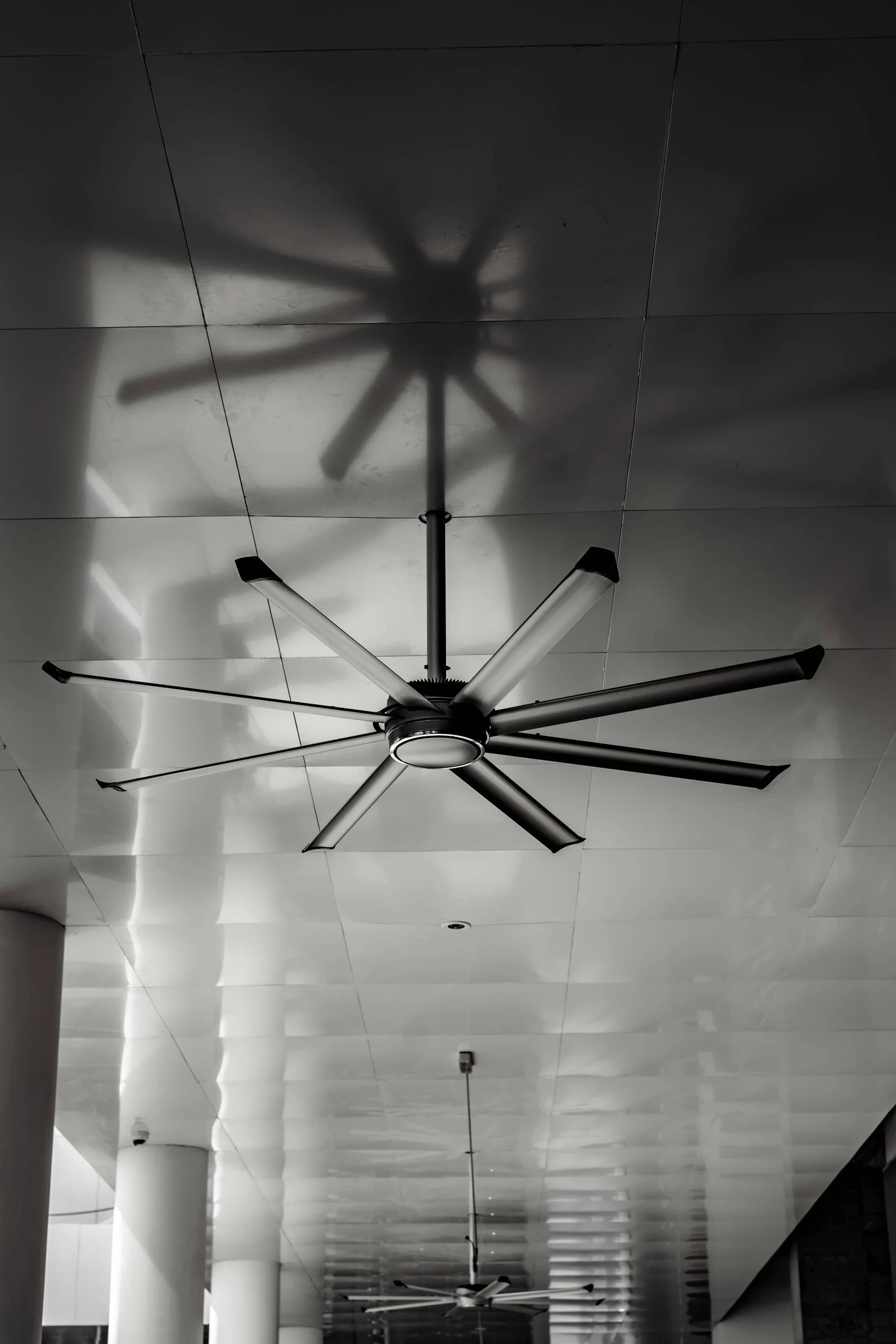
Above the judge’s seat, the paint peeled in slow, silent protest. A ceiling fan groaned like an old storyteller, mid-way through a tale that had no audience. The air smelled of starch, sweat, and the irony of air conditioning installed but never switched on.
Justice Krishnaswamy presided with the detachment of a man well-acquainted with disappointment. He had outlived two emergencies and three stubborn chief ministers. He longed for a hot plate of red rice, sambhar, avial, and a shard of papadum more than he longed for truth. His fingers turned the pages of the state’s case, but his ears drifted, following the scent of lunch like a stray.
Across from Selvi, the prosecution sat like a wedding party at the wrong function. Their lead counsel wore his silk robes like temple garlands—meant to be seen, not touched. His cufflinks flashed like temple bells caught in early light. Two juniors beside him flipped through files with theatrical competence: boys playing bureaucracy.
Behind Selvi, three members of the Uzhaipor Urimai Iyakkam—Labourers’ Rights Organisation—sat upright, silent, hands clasped as though making prayers that had not yet failed. One held a plastic bag of documents—stamped, signed, carefully folded as if they might bruise. Another had sandalwood paste still damp on his forehead; devotion, it seemed, hadn’t waited for the hearing to end.
But the tribunal wasn’t truly about Selvi, nor these men, nor even the factory owner now folded into obituary. The charge hovered over something looser, more disobedient: an idea. Rag-stitched from ambition and memory, whispered into being in tea shops and union halls. It had no flag, no anthem. Only a name now uttered alongside “unlawful,” “violent,” “terrorist.” The state could not pronounce the idea’s hunger, so it outlawed its language.
Still, someone had to be summoned. Surely an organisation—they argued—must have an organiser? They hadn’t yet learned what it meant for a thing to have no centre.
By law, a declaration of illegality had to be laundered through process. Within thirty days, a tribunal must be convened. A sitting judge appointed. A notice published in newspapers that never reached villages where the postman’s bicycle rusted in the rain. Objections were permitted—if typed in English, affixed with a notary’s stamp, and purchased with hours few could spare and rupees fewer still.
Selvi had not sent a statement. She had come in person.
She boarded the 5:10 from Katpadi. By the time she arrived, her jasmine was beginning to wilt—but not her eyes. Those still carried the sharpness of unwashed truth.
The prosecutor cleared his throat—dramatic, practised.
“You deny the organisation’s role in the incident?”
Selvi looked at him as one might look at someone who had never stood too long in a factory with no fans, no breaks, no language to file a complaint.
“There are many kinds of violence,” she said. “Some wear uniforms. Others wear silence.”
Justice Krishnaswamy glanced up briefly. Then returned to the paperwork. His pen hovered. Scribbled. Moved on.
“Please answer the question, Miss Selvi,” he said.
Part Two
The factory was twenty kilometres from the village, just past the stretch where the coconut trees gave up and the land turned to iron. Indha area la oru smell irukku, the drivers would say—a scent of molten things, burned skin, and silence. The kind of place that ate light by the time the afteroon shift began.
The man who owned it had inherited everything but humility. In the nearby towns, the people in the village said, his shirts were whiter than his workers’ lungs. His factory produced machine parts exported to Malaysia, sometimes Germany. The workers it consumed were local.
One morning, the workers found his body behind the storage godown, jaw dislocated, tongue cut, head split like a watermelon thrown from a great height. No witnesses. No statement. Only whispers.
The police came. Then the news vans. Then the state.
Someone, somewhere, said it was Selvi’s doing. Not hers, exactly, but the idea she had lit like a match in the minds of men tired of kneeling.
By the time the rumour reached the village, it was already fact. They said it had been planned. They said it was the women who’d incited it. They said it was the Iyakkam that had turned worker into weapon.
Selvi had no answer for it. Only memory.
She had returned a year ago. Chennai University had taught her how to cite laws by their numbers, how to stand when she argued, how to drink filtered water from taps labelled “For Staff Only.” She had gotten in on a state scholarship handed out during the 2020 elections, a campaign flourish disguised as empowerment. The district collector had come to her school with cameras and garlands. Her name was announced on stage, and someone gave her a plastic folder with her future inside.
She did well, mostly. There were three arrears in her final year—civil procedure had defeated her twice, and jurisprudence once—but she cleared them all before the convocation, where she wore borrowed heels and cried quietly in the bus home.
Back in the village, everything had waited in stillness, as if her absence had been merely a breath. Her mother, Rangamma, still swept the same wrappers from under the seats at Varma Talkies. Her father, Muthukumaran, still manned the popcorn machine, letting kernels pop like small freedoms. On good days, he slipped a warm handful into his pocket to take home to Selvi, a ritual he resumed without explanation.
Selvi had brought back her education like a lantern. She didn’t start with slogans. Only with pamphlets. One evening, under the neem tree outside the temple, she began to speak about working hours, about minimum wage, about the laws that seemed to exist only in textbooks and courtrooms, never beyond factory gates.
She called it Uzhaipor Urimai Iyakkam—not a union, not a front. Just a space to talk. To learn. To remember that workers were people before they were statistics.
For the women, she opened a separate cell, informal and unregistered. A place to speak about what happened when the night shift ended or when husbands returned with anger buried under fatigue. Sometimes, all she did was listen. Other times, she took the women to the local panchayat and stood behind them as they spoke.
It had only been a year. The Iyakkam was young, often ignored, sometimes mocked. But it had started to flicker. A factory worker had refused unpaid overtime. A woman had filed a complaint against a supervisor. Small things. Not enough to bring a man down.
And then the death.
And then the story.
And then one morning, a letter came. Thick paper, government seal. It said her organisation had been declared unlawful. A threat to the nation. A terrorist body espousing “militant ideologies.” The words were sharp-edged, printed in English, designed to be final.
Selvi read it twice. Then she folded it neatly, as she’d seen her mother do with temple saris after a puja. She tucked it between her law books and sat still for an hour until it was time to say her evening prayers.
Outside her room, the fan turned in slow, hesitant circles.
Part Three
The ceiling fan was ticking again.
Not loudly. Just enough that it could pass for a memory. The sort that arrives uninvited in the middle of a sentence—like a dripping tap in an empty house, like the second sneeze in a room that has already gone quiet. A tremor passed through Selvi’s left hand. She tucked it under the other. Behind her, someone coughed. It sounded like her father.
Outside, a crow laughed. Or maybe it was choking.
The prosecutor stepped closer—not near enough to touch, only enough to trespass.
“You teach the working class to question contracts,” he said.
She didn’t answer.
The word teach sat oddly in the air. As if she had come with chalk and certainty.
“You stand before this Tribunal and say you merely informed them. Not incited. Not provoked. You didn’t strike the match, you only pointed to the woodpile. Is that what we are to believe?”
He turned, eyes skating over her. Not stopping. Never stopping. “And yet a man is dead. A factory owner. Beaten with iron rods, twenty-three wounds, at least six to the face. You do know what a face looks like after six iron blows?”
Selvi opened her mouth. But the silence came out first.
The judge did not lift his eyes. He was a man used to not looking. A man who had, perhaps, long ago learned that to look at a woman when she is being undressed by language is to become part of the ritual.
“You say your parents still work in a cinema hall,” the prosecutor went on. “Your mother—a cleaner?”
Selvi nodded. Slowly. Her jasmine flowers were still pinned in her braid, but the petals had browned, crumpled at the edges like forgotten tickets.
“Then you must know, intimately,” he said, his voice dipped in polite cruelty, “what it feels like to be looked down on. To clean away the piss of others. To go unseen except when convenient. That breeds a certain resentment, doesn’t it?”
Behind her, her mother flinched so quietly that only Selvi heard it. Or maybe it wasn’t a sound. Maybe it was just the remembering.
“You are the daughter of labourers. That is public record. And yet you … studied law. In Chennai. On state money. A scholarship announced during elections. The state gave you a ladder. And you used it to climb onto rooftops and shout slogans?”
Though her voice was smaller than it had been before, she said, “I just learned the law.”
“But did you also unlearn?” he said. “Unlearn the bitterness? The rage that comes from being given crumbs by a system that bakes whole loaves for others?”
It was clever, the way he said given. As if her years of study had been an accident. As if the late nights under hostel bulbs and the reheated rice packets were things she should be grateful didn’t go to waste.
“Tell us, then,” the prosecutor said. “Is it not true that your sessions encouraged workers to speak back? To question? To gather in ways that resembled—how shall I put it—an assembly?”
“I told them their rights,” she said.
He smiled. “Yes, yes. That ancient song. Rights. Like windmills for them to tilt at. But you see, Miss Muthukumaran, rights in the wrong hands become weapons. Rights without gratitude become rebellion. You fed these labourers words they could not digest.”
Tick.
The fan was slowing down now. A tired circular hum. Like a mosquito, dying mid-flight.
“And what do you know of violence?” he asked. “Have you ever been in a factory at midnight, surrounded by men with clenched fists and quiet eyes? Did you know they had iron rods? That they had planned routes? Do you know how the skull cracks when struck just above the ear?”
“No,” she said. “I don’t know.”
“But you taught them how to want,” he said. “That’s worse.”
The judge tapped his pen. Once. Twice. Like a gavel that had grown tired of sounding like itself.
Then—almost gently, as if granting her a final kindness—the prosecutor asked:
“Do you think the state is violent?”
What was he asking her? She looked at him, not with defiance, but with something more terrible: comprehension. She was a woman who had spent her life studying cages, only to realise the lock had always been inside the cage itself.
Without waiting for an answer, he continued:
“What did you teach them in your meetings? Do you even know what they did with your words?”
She thought of the plastic chairs stacked in her little office. Of the chalkboards that never erased clean. Of tea gone cold while a woman explained the bruises on her thighs.
“I didn’t teach them to kill,” she said. “I taught them they weren’t born to be punished.”
He looked at her as if she’d said too much. Or worse—too little.
The judge cleared his throat. Once. The sound echoed like a dropped key in a midnight street.
The prosecutor pressed his advantage like a palm against a neck.
“You seem angry, Miss Muthukumaran,” he said. “Entitled. Is that what law school teaches now?”
“I believe,” she said, her voice barely audible above the rustle of robes and breathing, “that violence is not always carried in the hand. Sometimes it is passed in laws. Or in the ease with which we forget who cleaned the courtroom before we arrived.”
The words dropped like seeds on salt soil, full of intent but was destined not to grow. They made a sound, but not the kind anyone would call an answer.
The prosecutor nodded, as if to say Exactly.
There was no sound except the slow chewing of space by time. The fan gave one last cough. The ink in the judge’s pen ran a little dry.
And, somewhere in the back row, a sandalwood thread broke.
Part Four
The villagers said—never in full voice, never directly—that Selvi’s name had outgrown this place. It no longer fit on the brass nameplate outside her house, which wasn’t a nameplate at all but an old steel thooku plate, bent at the edge, nailed into a cracked blue wall like a badge of stubbornness. In the middle of the plate was their family name “Muthukumaran” painted in a brighter blue. The rust had started to bloom at the corners. So had memory.
She had left for her legal education during an election summer, when loudspeakers were louder than roosters and pamphlets fell like ash from the sky. The train that took her to the city smelled of sweat and slogans. Her salwar was borrowed, her chappals too large. Her mother had slipped a few dried neem leaves into her blouse—protection against city fevers and other unseen afflictions.
When she came back, she carried herself differently. The suitcase was plastic, the words inside it English. The change didn’t arrive with announcements; it arrived in silence—in the way she no longer paused at the teashop corner, no longer tucked her shoulder inward when men passed. Not out of pride. But because the city had taught her something older than law.
The villagers called her “college girl,” as if it were a blemish. The words rolled in their mouths with the dull bitterness of overripe guava—too soft to bite, too sour to swallow. Some said she’d grown arrogant. Others said the city had stolen her softness. A few just murmured that a girl walking alone after sundown, even with a law degree, was a shadow walking toward trouble.
Of course, not everyone cared. Approval and disapproval flickered briefly, like power during monsoon season. Mostly, people were just too tired. Envy came and went, a dragonfly on stagnant water. Why her? Why that girl with movie theatre parents and salt on her skin? And, like most things here, even jealousy didn’t last. It peeled like wall paint, gave way to chores. There were too many hungry mouths, too many unpaid loans, too many wrists with cuts from glass bangles.
Part Five
Her parents had never had another child. After Selvi, her mother’s womb had closed like a tired fist. The village said she’d angered the gods—hadn’t asked properly, hadn’t offered turmeric at the right shrine. And then, a daughter. Not a son to carry sandalwood, but a girl with stories in her eyes and ink under her nails. A girl who asked too many questions before her milk teeth fell out.
The local doctor called it a curse. He wrote it down as destiny.
They had wanted a boy. They raised a girl instead—a girl who stood too straight, watched too much, laughed too little. Not fragile, no. But a kind of jasmine that blooms out of season. The kind you don’t pluck. The kind that changes the air without permission.
When “Uzhaipor Urimai Iyakkam” was first spoken aloud, it hung in the air like a prayer uttered at the wrong temple. Too many syllables. Too much ambition. Some people thought Selvi was starting a drama club. Others suspected she had fallen in love with a city boy who spoke of socialism. One man spat and said these things never ended well for girls with opinions.
“Another city trick?”
“She wants to be on TV.”
But she didn’t begin with speeches. She started with questions.
How many hours do you work?
Do they give you gloves?
Do you know what the minimum wage is?
At first, these sounded like English. But over time, they began to sound like life.
People started seeing patterns in their suffering. That it wasn’t just bad luck. That names had been erased from registers the week before someone got injured. That women who spoke up were transferred to distant units or made to clean latrines. That the factory gates shut faster when someone complained.
The answers came slowly, through lips cracked by heat and hesitation. But once the questions were asked, they lingered—like incense smoke that finds its way even into closed drawers. A boy who had once worked at the steel polishing unit began to say no when his supervisor shouted. A girl who had never spoken in public asked what maternity leave meant.
Patterns emerged like stains on concrete. Quiet, stubborn. Wages missing. Hours stretched. Injuries ignored. Some women began to walk straighter. One even refused to serve tea in a meeting.
And still, Selvi never said Revolt. She only said Remember. She said Write it down before it is erased.
The Iyakkam began to appear in nearby villages in different forms. Shapes formed by smoke. A tune hummed under the breath. No one taught it. It travelled. A phrase scratched on a blackboard. A pamphlet left in a bus. A number passed hand to hand like sacred ash.
Men who once spat tobacco near her father’s feet now nodded at him when he passed. Women who used to whisper about Selvi’s clothes now came to her to show their bruises. There was still suspicion, yes. But it sat beside something new: recognition. The kind that makes your neck taller without you noticing.
When the factory owner died, it was twenty kilometres away. But violence travels faster than rumour. Within hours, someone had said it was them. The Iyakkam. The girl. Selvi.
No one had seen the hands that had burned the man’s throat or torn his tongue. But the story sharpened quickly, like a sickle on stone.
Some said it was the workers—drunk on ideas. Others said it was an outsider. A contract dispute. A political game. Some said the accused were already arrested. But some also said that those men had nothing to do with the murder: They were just a few manual scavengers from the neighbouring village who found themselves in the wrong millennium and the wrong world.
But, in whispers, around kitchens and water taps, her name began to float in the dark. There were whispers that the murderers were secret workers. That they had, in Selvi’s words, woken up. That the Iyakkam had taught them to walk too tall. That somewhere in those pamphlets and charts, there had been a sentence sharp enough to kill. Even in Selvi’s own village, the air changed. Some eyes no longer met hers. Others met them too long.
What frightened them, perhaps, wasn’t the violence. It was the thought that a girl—one of their own—had taught the working man to stand straighter. That she might have made people believe they didn’t have to bend anymore.
It was easier to believe she had gone too far. That she had read too many books. That city people, even if born from dust, carried dangerous thoughts in their bags.
And so, when the government declared the organisation unlawful, when the word “terrorist” landed like a rusted nail in the village’s throat, no one lit a fire. No one raised a hand. No one tore the notice down.
They just kept their heads low again. As they had before. The tribunal hearing was the day’s soap opera.
Only the jasmine seller’s daughter wept. Quietly, though. Because once, Selvi had taught her to spell her name in Tamil and told her it was beautiful.
Part Six
The fan had begun its slow stutter overhead, slicing the air into uneven strips. Somewhere in the corner, a fly tapped against a closed window, rhythmically, like a clock losing time. The tribunal room held its breath in a thick hush, the kind that belongs to train stations moments after a departure.
Outside, a kite wheeled into a sky the colour of rusted spoons. Inside, the prosecutor stood again, wrist-flicking a folded paper that had once lived briefly on electric poles and plywood tea stalls. The ink had bled in some places; the staple had rusted at the hinge. It smelled faintly of glue.
He smoothed it with the care one might reserve for a sacred text, or a recipe for poison.
Then, softly, as if unveiling scripture, he read:
“We must resist the machines that grind us quietly. We must organise until even silence becomes a roar.”
The room did not move. The sentence hung there, suspended in dust.
Selvi shifted. A thread had come loose at the end of her sleeve. She tugged at it gently, as if unsure whether to pull or hide it. The man in the black silk didn’t look at her, not really. He looked past her, through her, into something he had already decided she was.
“And is it entirely coincidental,” he asked, voice curved like a sickle, “that not long after these words were distributed, a certain factory owner—twenty kilometres west, was it?—was discovered in an unfortunate circumstance? And that some of those arrested were known to frequent your little gatherings?”
He didn’t wait for an answer. The question was not an invitation but a performance.
Selvi opened her mouth, but the silence around her was already filling with his story. A denser story. A simpler one.
She might have said that machines were metaphors. That “grind” was the ache in her father’s spine, not a plot. That “roar” was the sound of dignity arriving late, not violence rehearsed. But the words caught in her throat like a seed husk.
She said instead, too softly, “I believe violence is not always carried in the hand. Sometimes it arrives folded in a file. Or whispered in the speed with which certain names disappear from the voters’ list.”
A murmur stirred the back row—sari pleats shifting, someone adjusting their sandals, the barest rustle of breath. Without turning to look, Selvi knew that her mother’s hands had tightened in her lap, that her father, still and bent, watched the floor as though something might spill from its veins.
The prosecutor tilted his head, the way one might admire a beetle before crushing it. “Let the record show,” he said, gently now, as if teaching children, “that the accused holds that silence is violence. That laws can injure. That the State’s institutions are, shall we say, not clean.”
He turned to the judge. “Some might call that analysis. Others might call it theatre. But here,” he said, tapping the desk lightly, “we call it sedition. Polished, perfumed sedition.”
Selvi did not flinch. Not exactly. But something in her jaw went slack, as though the architecture of her words had collapsed inward. She looked toward the window, not to escape, but as if expecting the fly to finally break through.
The judge made a note in the ledger with a pen that refused to run out of ink. The air felt full of things unsaid. The kind of air that coats the skin after a monsoon—when the earth can’t decide if it’s healed or just swollen.
The room did not decide, either. It only listened.
The prosecutor, refreshed by the scent of blood, held up a government notice. The paper was freshly creased, still arrogant with the crispness of authority.
“Under The Law,” he said, “once an organisation is declared unlawful and terrorist in nature, any association with it thereafter constitutes a punishable offence. Section 17-C, Explanation (ii), ‘in furtherance of its activities.’”
He paused for effect. As if the phrase were a scalpel he enjoyed polishing before the cut.
He turned to Selvi. “You have not denied your role in the founding of Uzhaipor Urimai Iyakkam. You have, in fact, taken great pains to explain it. To justify it. To speak of it not with remorse—but with pride.”
Selvi tried to respond, but he raised a hand like a schoolteacher catching a pupil in a lie.
“And now,” he continued, “you stand here defending the organisation. Not denying it. Not distancing yourself. But insisting, even now, that it was not unlawful.”
“I am just defending myself,” Selvi said quietly. “And the workers who came to learn, not to riot.”
“But you admit the organisation existed. You admit you led it. You admit its meetings continued until the day it was banned. And after it was banned, you stood by it.”
“I said it was not what they claimed it to be,” she said, her voice beginning to fray. “That is not the same as furthering its activities.”
The prosecutor let the room breathe just long enough for everyone to feel the trap.
“And what, Miss Selvi, is furthering, if not standing on record to say the organisation was right?”
He stepped forward, voice low, almost intimate. “What is association, if not this performance of innocence?”
He turned to the judge. “This is not defence. This is allegiance in disguise … In fact, this is not even in disguise! What has happened to our democracy if terrorists can arrogantly defend their crimes!”
She blinked. Not in confusion, but in protest. As if blinking alone could slow the machinery.
“I am not performing allegiance. I am untying a knot that you refuse to see.”
But the judge, ink-blind and benevolently mute, continued writing something slow and endless into his ledger.
The prosecutor smiled again. “And so we reach the core of it. It is not only what she did before the ban that indicts her. It is also what she did after. Because once named, the Law has no patience for nuance. To defend a body after it is called diseased is to become a carrier.”
Selvi looked up. There was dust caught in the beams of sunlight. Each particle hung like a verdict not yet pronounced.
“I did not spread the infection,” she said. “I handed out the medicine.”
But metaphor had no oxygen here.
The prosecutor turned, triumphant. “Let the record show: The accused continues to speak in the name of the banned body. Therefore, she is, by extension and by statute, part of its apparatus. She furthers what she claims to mourn. And so—she is guilty.”
A murmur rose from the back—agitated breaths, a rustle of sari pleats, someone’s throat being cleared too forcefully. Selvi was again aware without looking that her father, eyes glassy, looked at her not with shame, but with a terrible sort of knowing, that her mother had folded her hands again, not in prayer, but in containment.
Because The Law had spoken. And The Law, once uttered, had no ear for correction.
It was not that she had acted.
It was that she had answered.
Part Seven
The judge spoke only once, and even then, it was with the kind of voice that sounded borrowed—like a prayer memorised by someone who did not believe in God.
“Pending further hearing,” he said, eyes fixed on the blank space just above Selvi’s head, “the accused will be remanded to judicial custody. She may appeal the decision at the Madras High Court, should she so choose.”
It was the should she so choose that lingered. Like an aftertaste of metal.
No one stood. No gavel sounded. The hearing ended not with thunder, but with the quiet collapse of a room returning to habit. The fan resumed its muttering overhead. The pen resumed its slow bleed onto cheap paper. The sun inched away from the window, as if unwilling to witness what came next.
Two constables came forward, apologetically almost, as though they had come not for a body, but a suitcase. Selvi stood, not resisting, not surrendering, either—just standing, like a tree unsure whether it has already been felled.
Her parents did not speak. Her mother clutched the edge of her sari as a drowning person might cling to cloth. Her father looked as if he had forgotten what to do with his hands.
Selvi walked out of the tribunal the way one walks out of a fire—alive, but slightly less than whole.
She thought of many things. Of the plastic suitcase she had left behind. Of her mother's way of folding jasmine into her braid. Of her father’s voice, once loud enough to fill a cinema hall.
But what she remembered most—what came and sat beside her in the dark—was a single night, years ago, when she was ten and had come home crying because the schoolboy who delivered milk had called her “sweeper's child.”
That evening, her father had come home with popcorn in his pocket. He didn’t ask why she was upset. He simply poured it into her hands, still warm, and said, “Next time he calls you that, tell him your father runs the machine that makes magic.”
She had believed him. That he made magic.
Now, in the half-darkness of the verdict built to forget people, Selvi realised that the magic machine had broken a long time ago. And nobody noticed. Not even her.
SAMYUKTHA KANNAN
Samyuktha Kannan is a student of law, based out of India. Her work includes research and writing on Kashmir, political economy, and carcerality. Her works have previously appeared in places such as ZNetwork.org, Frontline, Human Geography, and Groundxero.