
A Literary Journal
At The Meeting Place
for The Rose Window, Matisse’s final work,
Union Church of Pocantico Hills
I give
my hands, tocolor.
Itgave me back tolight.
I give myhands,
tocolor. It gave me back.
Like stainedglass windows, it leaves room,
tohear the wisdom.
Blue,
opens its mouth, wheremy edges
findtheir rhythm returning.
Listening through the forgiveness of green.
The forgiveness ofgreen.
I am the circle, a trinity of calm,
growth, warmth. Like sunlight
exhaling a hum,
toobright tospeak.
Breathing in gold
at the meeting place.
Held together by patience, beginning in fire,
I am
light madeof pieces. Beginning in fire
held together by the patience of shadow.
At the meeting place,
breathing in gold tospeak toobright.
Exhaling ahum like sunlight, warmth,
growth, calm, a trinity.
I am the circle,
the forgiveness of green. Listening,
returning to the rhythm. Where my edges
opens it’s blue mouth.
The wisdom tohear,
to leave room, like stainedglass windows.
Back to light, it gave me tocolor.
My hands, I give
Interview
MQ Which aspect of the Union Church's history, specific window(s), artist biography, or other part of this project attracted your poetic imagination and why?
PV I was drawn most deeply to Henri Matisse's Rose Window, both for its symbolism and for the story behind its creation. Part of my attraction began with the word “rose”; I love their beauty, their thorns, and their devotion. In a church, a rose window is often positioned as a spiritual center, and knowing this was the first window commissioned for the church felt significant, as though the entire congregation is oriented toward bloom.
I was especially moved that this was Matisse’s final work. The fact that the Rockefellers received notice of its completion by letter on the very day he died lends the story a quiet, mythic resonance. That it was created in remembrance of a woman he knew and believed in, a mother, deepened my connection. The green reflection throughout the church also resonated deeply with me. Green is my favorite color. More than anything, I was drawn to the idea that light could be cut, shaped, and held together into devotion.
MQ How did that source material inform the poem you wrote for this project in its shape, style, music, or content?
The poem is structured as a palindrome that moves forward and then reverses, mirroring itself to enact what the rose window does visually: radiate outward from a center and return. Repeated lines create a circular motion of exhale and inhale.
Learning how stained glass windows are physically made also shaped the poem. The process of fragments being arranged into coherence and the use of fire, felt deeply aligned with my own life. Additionally, studying Matisse’s late cut-out period influenced my language to be pared down, image-driven, and essential. At its core, the poem holds a simple belief: that we are light, even in pieces.
MQ What surprised or delighted you about the experience?
PV I experienced joy, love, freedom, and forgiveness. The shifting green light felt alive within the space, and the act of writing became a devotional experience. I did not expect the process to feel so intimate; it felt, instead, like being held.
MQ How was it for you to read, and hear others read, this work in the church itself? What stood out to you about any shared or divergent themes or approaches?
PV As the other poets read, I felt that we were all circling the same themes and arriving at the same center. Though I was the only poet who wrote directly to the Rose Window, I could hear my poem within theirs and theirs within mine. There was a collective reaching toward light, inheritance, and transcendence.
PHYLISHA VILLANUEVA
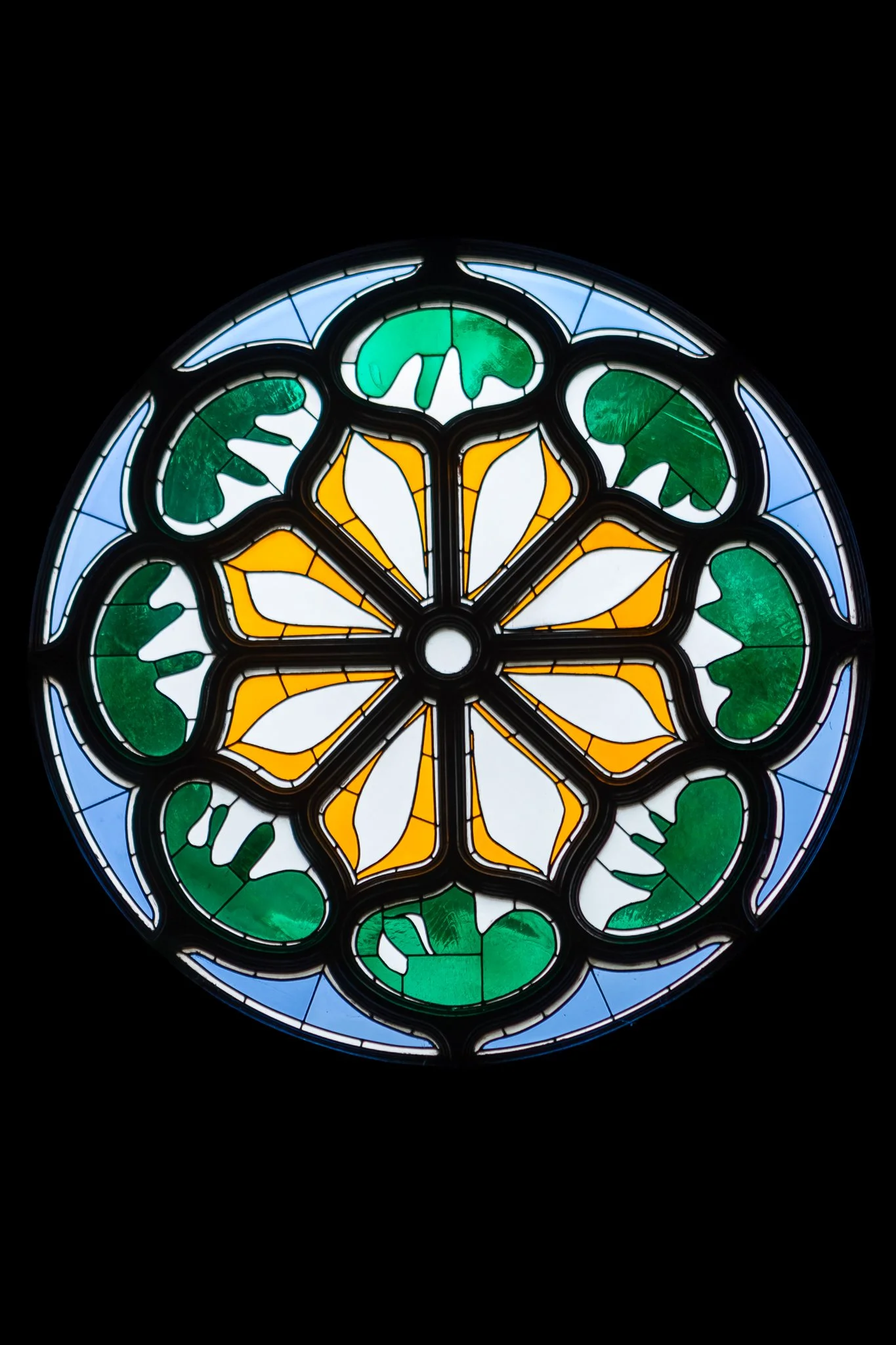
The Rose Window by Henri Matisse
Phylisha Villanueva is a Belizean-American poet, author, and educator, and the Poet Laureate of Westchester County. Her work centers on identity, healing, womanhood, and survival. She is the founder of Literary Lituation and co-founder of The Yonkers Writing Group. She has facilitated writing and community arts workshops across schools, cultural institutions, wellness spaces, and grassroots organizations. Phylisha brings over a decade of experience in youth development, community arts leadership, and trauma-informed facilitation.