
A Literary Journal
A Manageable Condition
He could manage this, he told her. With the right diet and maybe some exercise, he could keep this under control. It wasn’t affecting his work. It wasn’t affecting their relationship. This was a manageable condition. This was something he could keep under wraps.
She only looked out the window. The tangerine morning painted her face, drew autumn from her. He reached for her hand and gave it a squeeze, a pulse between them. She looked back at him, her eyes skittering, overwhelmed with thought.
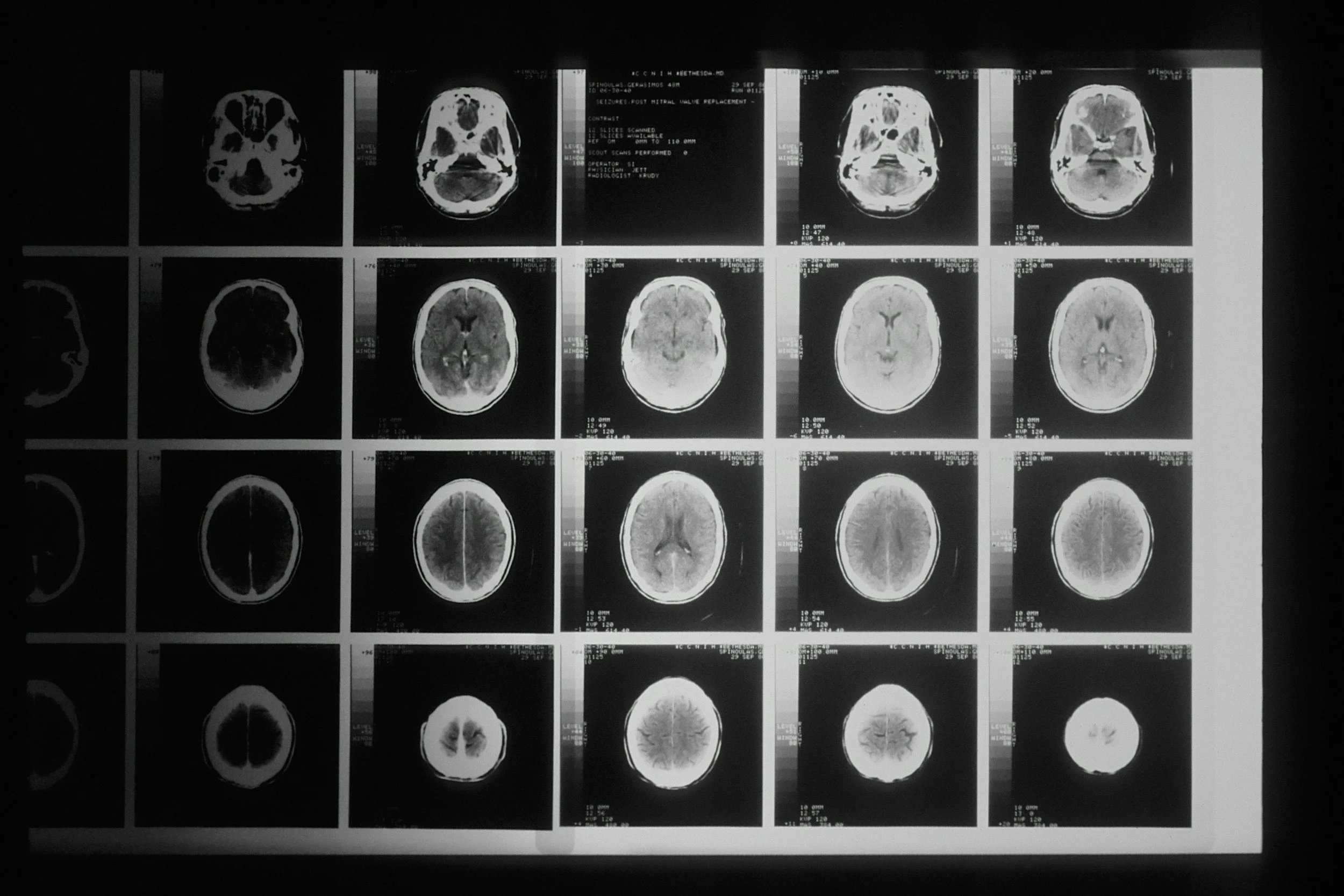
“It’s not life-threatening,” he said. That’s what the doctor had told him. The doctor had held up the CAT scan and pointed at the darkened mass blurry against the light, circling it with a forefinger. This right here, the doctor was saying. Some bouts of vertigo, visual abnormalities, these things were bound to happen. Par for the course. But if things got any worse, who knew?
She drank from her mug and set it down silently. She shook her head. He saw the gears turning, the extrapolations. How long had he left this unattended? This thing growing and mutating. Had he known about it? Maybe, in retrospect, she had seen signs. He expected her to say something, but she didn’t. She rose and brought the mug to the sink and rinsed it out. She inspected the staining around the edges. He was behind her, cornering her in the kitchen.
“I’ll be okay,” he said, “We all have these things to deal with. Little bugaboos and crosses and whatnot.”
She sidled out around him into the living room. In her scrubs, she looked short to him, formless. “If you insist,” she was saying. She was heading out the door. It was her rotation in the weekend schedule. It was still early.
“It’s going to be okay,” he said, “These things happen.” He hugged her and received a perfunctory physical response. He kissed her forehead.
“I’ll see you later,” she said, walking out.
“I love you,” he said to the closing door, hearing her faint echo coming from beyond it. He stood there for a minute. It was still and quiet, save for the sound of children in the school down the street. That eerie, out-of-time feeling of a cave carved into a cliff, the ocean far off in the distance.
He walked out of the kitchen and into the living room, sitting down on the couch, fighting the impulse to look at his phone, to connect to the world out there. This was something he was working on, that he felt was contributing to the symptomology of his affliction. It was something he had to cut out of his life, for his health.
So he rose and went to the cabinet where he stored his laptop. He took it to the couch and sat down and swirled his finger across the trackpad, watching the screen wake with a suddenness that was somewhat startling. He was startled more and more now. He woke in the middle of the night now, clutching at the air.
He was searching for foods that would positively impact memory. He phrased it this way too. His query was “foods that are good for memory.” He was getting straight to the point because he was meal planning, making concrete plans for purchases that would positively influence his well-being. Berries, salmon, mushrooms, leafy greens, he learned. These were the things to drill down on. He was going to pair them with mnemonic exercises, little songs and acronyms and tests. Yes, he could incorporate these things into his life. He wrote them down in a Word document he called “Practices for Better Living.”
Then he opened a new tab. He wrote simply “brain tumor.” He got the AI-generated summary telling him the exact nature and path of his affliction, which he read a couple of times. He did not know what the endgame of this search was. Sometimes, he felt that his life existed most truthfully between him and his devices. His devices knew him in intimate detail that could not be safely shared with any living being. Yet this relationship was not without guilt.
He shut the laptop and put it on the couch beside him, listening to the tolling of the church bells, the melody that everyone knows. Descending: bum, bum, bum, bum. Ascending: bum, bum, bum, bum. Then the eight strikes of the hour. Something to live your life by.
* * *
He sat at a table on the patio, his hand wrapped around a sweating glass of beer. Reggae was filtering down from a speaker up above, the light fading all around. A blond child came running out and stood staring at him. Tony walked by the kid and sat across the table.
“The line to the bathroom is a mile long,” he said, “I thought I was going to have an accident.” He said nothing to the kid.
He nodded, looking up from the surface of the beer at Tony. But he didn’t say anything. He drummed his fingers on the surface of the table and looked up at the line of antique lights that came on suddenly, fighting away the dusk. He studied the filaments, trying to remember how they worked exactly.
“So how bad is it?” said Tony.
He looked down at the beer and then up at Tony. “Fifty-fifty, as far as operability goes,” he said, “With the options being brain-deadness and death or else totally fine.”
“And Danielle says what?”
“Not much, as it turns out. The doctor said it’s a nonissue at the moment. An inconvenience more than anything else.” He had a sinking feeling in his gut, a light seasickness. “There are strategies to manage it. Ways to lessen its impact, if you will.”
Tony drank from his glass and narrowed his eyes, thinking it over, apparently. “I think it’s a great opportunity,” he said, after a beat. Tony was in sales. “Here’s an opportunity to think about the way you’re living your life. Your thoughts. How many people get the chance to think about what they’re thinking about? You could really make some changes.”
“Like what?”
“You’re being a real downer about this, Greg. You know that? There are some opportunities here. Tell me about your morning routine. Do you look at your phone first thing? Rush to the coffee maker? Have a bowel movement before heading out?”
“Jesus, Tony, I don’t know. I eat something small for breakfast, have a cup of coffee, and get in the shower. I do what everyone else in America does.” He sipped his beer again, which had gone almost completely warm, and he reflected on the likely beerless future that awaited him. He grimaced a little wistfully.
“Why don’t you try a jog at dawn? Meditate in a local park? Make a smoothie from fruits purchased from local vendors at the farmers market?”
He gave Tony a long wry look.
“I’m serious. You can think about the tenor and shape of your thoughts now. This is an important opportunity to have. You’re being a downer about it.”
“I just want to manage it. I don’t want to scare Danielle. It’s important that she doesn’t concern herself with this.”
Tony raised his eyebrows and finished his beer, leaving a foamy discard at the bottom of the glass. “Hey, kid,” he said to the boy now sitting at the table next to theirs, “Shouldn’t you be with your parents or something? Scram, huh?”
The doors swung behind the kid as he passed into the darkened interior of the brewery.
“No respect,” Tony said.
“I got to pay the rent. That’s my main issue. The rent and the food and the health insurance and all. This train’s got to keep moving. As long as it doesn’t affect that, I’m golden.”
“If you say so,” said Tony.
* * *
A week later, he was standing in the living room, wondering why he had come in. It was early and he was standing in his underwear, the balmy morning slicing through the blinds. He took two steps and stopped again. A siren wailed in the distance and he turned toward the wall as if he might see through it. Then it was the correlation between Homeric sirens and the modern siren, murky in his thoughts. One for summoning, one for repelling. This was an important distinction, he saw now. This was something to roll around his head.
“What are you doing?” Danielle said, standing behind him in her robe.
“I was reflecting on the nature of sirens,” he said.
“You could do that in the bed, maybe. It seems like a half-awake thought, anyway.”
“I am half-awake. Besides, I’m going for a run.”
She stared at him for a beat too long and then turned silently back to the bedroom. He went to the closet and slid on a pair of sweatpants and fished his largely unused running shoes from where they had been kicked off a year prior, the last time he had made resolutions. Danielle slid back into bed.
In the living room, he considered what he might’ve been after when he came in the first time. He looked around the room, wondering, hoping some object would manifest a connection that would lead to a coherent thought. But he didn’t dwell too long.
A moment later, he was out in the street, his arms pumping at either side of his chest. The morning was cool and crisp, grey-domed in sagging clouds, the sidewalks damp, grass nodding with dew. He liked the silence of the early mornings, that empty weightlessness, a thing that unfurled into the day and wilted into night. It always felt like a rare chance to clear his head, to not concern himself with his thoughts, which were beginning to trouble him.
Instead, he was thinking in indistinct images, glimmers, silhouettes that swelled and shrank without language: odd moments of fascination with cracks in the asphalt, a glimpse of tree branches just beginning to sprout leaves again, the mountains half-visibly arching there in the far distance. But these were always intercut with Danielle, a proposal he was halfway through at work, a nagging task in their apartment. These things that troubled his conscious mind with an alarming insistence, a blooming quality that made them impossible to entirely ignore but only half-escape in the way of a rescheduled appointment.
Did he have somewhere to be? There was a ripple of cold running through him as he rounded the corner. He ran harder, as if the corporeal focus might dissipate the fear, might rectify whatever it was. The answer, he felt, was grounding himself in the physical world around him, in the humming grey car coming up the dead street behind him, the sway of the palms up above, the old woman wrapped in a neon windbreaker with the shaggy white dog pushing ahead of her, choked by the leash. These were things worth devoting his attention to, things worthy of study and reflection.
He rounded another corner now, breaking out onto a busy street, the blast of horns and a mirage of brake lights, and the exhaust shimmering up from tailpipes. Things shimmering all around him, as a matter of fact. A hazy quality to the air around him, prevalent still as he rubbed his eyes. He stooped over to breathe. There was a catch in his throat that sent him into a coughing fit. He cleared his throat hard into his clenched fist and spat. In the road, a car passed slowly, the woman’s face framed in the window, her expression halfway between empathy and disgust, blurred as she passed. She looked like Danielle.
He leaned up again and put his hands on his hips, looking down the length of the avenue to its termination point in the pallid sky. He thought absently about how long he would have to run to get there. Then he started off again.
But almost immediately there was the rush of nausea and bile cropping up in his throat and he had to stop. He stepped into the shade of the tree and waited a few minutes for his head to stop swimming. He started walking back.
When he came in, Danielle was in her scrubs again, pouring coffee into a traveler. “That was fast,” she said.
“I’m in bad shape, as it turns out.”
“Probably on account of the no running you’ve done.” She screwed the lid onto the cup. “You can’t just go for a long run out of nowhere. We’re in our thirties.”
He sat on the rug, conscious of the sweat dappling his face, the shirt sticking to his skin, and Danielle’s probable reaction to him sitting on the couch when he was covered in sweat. “I used to run all the time. Before I met you. I went out at sunset, pushing off into the fading day. I ran and ran. It was something I did once, twice a week.”
“But now we’re here,” she said. “And I’m heading out. Love you.” She closed the door behind her.
* * *
In the waiting room, there were exactly twelve magazines fanned out across the table. There were sixteen fish in the aquarium: nine orange with black stripes and seven blue with yellow stripes. He counted these things, to have the facts. These were things that were irrefutable, where evidence could be provided, if need be.
A woman stood in the door and called his name and he rose. She was tall and pretty and flashed a stark white smile at him as he passed, leading him to the examination room, where he sat on the table with the flimsy paper. Then she went out.
In the interim, he continued counting: one sharps container, one biohazard bin, one trash can, three glass containers with cotton products of various stripes, five cabinets, one corner in which the veneer was peeling. This was an important environment. Big decisions were made here, vital news delivered. People broke down, probably, when they received this intelligence. They looked at the fish swimming in circles and came in here and received information that fundamentally restructured their lives.
Like he would now, as the doctor came in. She looked at him and said, “Gregory.”
And he nodded as she sat down in the chair across from him, hitting a key to rouse the computer. She crossed a leg over the other.
“Let’s see here,” she said, looking at the screen. She murmured as she read. He watched her eyes scanning. “Mhm, I see,” she said, “So what’s bothering you?”
“I’ve been having some visual abnormalities. Things fleeing in my periphery. I’ll think I see a bug and leap out of the way. My vision gets shimmery and strained.”
“So there aren’t any bugs you’re leaping from?”
“No,” he said, pausing, “There’s nothing there. That’s why I’m concerned.”
“Right. That is concerning. We’re not supposed to see things that aren’t there. I learned this in medical school. It was an important lesson, something I was taught by a doctor who was at the very top of her field.”
“Okay,” he said.
“And your vision is shimmery all the time?”
“No, not all the time, but definitely sometimes.”
“Mhm, hmm. Any idea what triggers it?”
He shook his head. “I do have a brain tumor, though.”
“I saw it in the chart. I don’t think it’s relevant.”
“Can I be honest with you?” he said.
“If not with me, then who?” she said.
“I’ve been having some problems with my mood. My thoughts. I have startlingly vivid thoughts of a dangerous nature. I have difficulty getting out of bed, completing routine activities. Things I took for granted, like brushing my teeth or sex.”
“Mhm, hmm. For how long?”
“Very recent onset. Sudden, you might say.”
“I’ll tell you the truth. I always tell the truth, it’s an oath I took. Here it is: this is beyond my scope. These are things you need to consult a psychiatrist about. The seeing things that aren’t there and the scary thoughts. These are things that I can’t treat.”
“They seem to be related to the tumor, I would guess.”
“Incorrect. The tumor is on a part of your brain that has nothing to do with your symptoms. I won’t bog you down with details, but they’re not even faintly related. You’re a little old, but these are psychiatric symptoms that manifest in adulthood. I have a guy I go to.” She wrote down a name and number on a scrap of paper and handed it to him. “You should see him, he’s great.”
He took the piece of paper and slid it into the pocket of his jeans. “Is there nothing you can do for me?”
“I gave you a referral,” she said. “What more do you want?”
* * *
He sat at his desk, rereading the same sentence over and over. There was something in it that he could not make sense of, some kind of syntactical mistake he could not spot. He rewrote it a few times and then undid the rewrites. He auditioned a comma, a semicolon, and a colon. He could not make sense of what he was trying to say or find the way to say it. There was language piling up in his brain, a collision of multiple words twirling over each other.
His boss came in and sat on the edge of the desk. He was a slight man with black hair coiffed back and a childish rosiness in his cheeks. He wore a royal blue sweater, the collar of a white oxford shirt stiffly splayed over it. His arms were crossed.
“Gregory,” he said, “I have some questions. They’re not easy questions to ask.”
“Shoot.”
“Are you well? Are things okay? These are in the way of preliminaries.”
“I’m doing fine,” he said. “What makes you ask?”
“A good leader does these things. A good leader listens to his employees, has a keen eye for changes. These are things they teach you in leadership seminars. A handsome man stands up there on the stage and says, ‘Employees are the heartbeat of your business’ and ‘Culture is key.’ He has hand motions that suggest violence just below the surface.”
“I can see the importance of these things. What’s up?”
“Well, incidentally, the last proposal you turned in was—” He paused to touch his chin as if he were thinking about this for the first time. “Incoherent. Hard to follow. What’s the golden rule around here, Gregory?”
“Write for children.”
“That’s right, Gregory. I need clean, punchy proposals that get right to the point. I don’t need sentences that go on and on for who knows how long. These program directors, they don’t have time for the clever metaphor or the artful prose stylings. They have cash burning holes in their pockets and they’re simply frothing at the mouth to give it away.”
“I don’t think I used any met—”
A hand came up. “Listen. I think you should take some time off, maybe. You’ve got leave hours piling up. You should use them. Go see a psychiatrist and tell him you’re contemplating a leap from an unspecified bridge. Nothing specific. You just need enough to get a stress note, you understand.”
“Okay, starting when?”
“As immediately as can be managed.”
“Am I being laid off?”
His boss scrunched his face, his eyes closed, and shook his head. “No, no, no,” he said. He waved his hand at him.
“But you’re telling me to leave?”
“I’m telling you to get some rest. There’s nothing wrong with that. We all need rest sometimes.”
* * *
So he rested. He moved through the apartment with a blanket wrapped around his shoulders. He treated himself as if he were sick. He gave himself due care and lay on the couch and watched television and read poetry. At night, Danielle pushed his hair back from his forehead and spoke softly to him.
“It’s going to be okay,” she said to him. “I know you’re scared.”
And sometimes he whimpered. Involuntarily, of course. He turned his face away from her, hiding the anguish. Because now it was apparent that things would not be okay.
What’s more, he thought about dying, methods by which to accomplish this. Sometimes he woke in the middle of the night and stood by the window and stared out at the swelling violet light that lay like fog above the city. He thought about how every person out in the city was responsible for their own unique glow, that they all had an idiosyncratic character to their emissions, how all these things coalesced into a greater whole. How each person was a synecdoche for the omniformal identity of this place.
And how his contribution would be removed with almost no notice from this strange convergence. How he would go dark and be a great big nothing, evaporating from the atmosphere and leaving nothing. He thought about Danielle alone and the wide vista of opportunities suddenly available to her after nine years of building a life with someone who would be deteriorating in the dirt.
Then, slowly, there was an enormous weight that became too much to bear. He felt it like a pressure on his chest when he woke in the morning, a shortness of breath that left him clawing at the air. Now this was something that could not be put into words, a kind of spiritual malaise that developed with each passing day into something insurmountable, making it impossible for him to complete the simplest tasks. Instead, it was all dead ends in his thoughts, phrases incomplete and garbled, stops and starts that melted into each other like rain on a window. A dense accumulation that lacked definition, a clear structure, a stable direction.
He found himself stumbling into rooms, lying down on the floor of the bathtub with the shower pouring down over him, eating and drinking at irregular intervals. He kept hours inconsistent with civilized life, staring out the window in the small hours of the morning. He began to forget. He forgot when he had eaten, bathed, last spoken to anyone. He forgot when he had last seen Danielle. He had flares of terror that possessed him and passed. He watched lots of daytime television. He snapped his fingers to melodies that came into his head and left. He slept a lot. He slept whole days away. He repeated phrases once or twice, locked and unlocked the door.
He waited for his boss to call. He waited for the outside world to reach out to him in a significant and meaningful way. He waited for some kind of intervention. The sole clear thought that possessed him was that someone should intervene. That this was something that required addressing. That someone should recognize his deterioration, his desiccation, and reach out to him.
But he said nothing. He worked hard to exemplify normality when Danielle was around. He smiled and nodded and cooked easy dinners. He concealed the scope of his devolution. He had quiet moments of peace with her, something akin to picturesque domesticity. He could not tell her that he wanted to die. He could not verbalize the extent of his wishing for death.
* * *
He did not hear from the outside world. He did not return to work. He did not end his life as he had dreamt of for so long. Instead, he forgot.
He forgot who he was entirely. He forgot his name, his parents’ names. He forgot that he had siblings and ambition and a hometown. He forgot that the world existed outside of himself. He forgot he had tastes and preferences and pet peeves. He forgot that he had seen movies and read novels and had experiences that shaped him into the specific form he was in. He forgot everything except Danielle.
And with his forgetting, his wish for death began to slowly dissipate. He did not think any more at all. He treated every moment as the only moment that had every existed. He lost future and past entirely. He was present and upfront. His responses were pragmatic and practical and addressed whatever Danielle had last said. He no longer thought of leaping from high places. He no longer considered death.
Instead, he was all animal. He had immediate needs that he satisfied. He contended with whim and whimsy. There was no thought of future or purpose or meaning or value.
“You seem better,” Danielle said. “Like you’re in a good place.”
And he smiled vacantly.
MATTHEW WOOD
Matthew Wood is a fiction writer from Los Angeles. He is a cum laude graduate of California State University, Long Beach’s creative writing program. Among other places, his work has appeared in Chapter House, carte blanche, Sinking City, Variant Literature, and El Camino College’s Myriad, where he was awarded the Tom Lew Prize for Fiction.