
A Literary Journal
Sugar Anniversary
1.
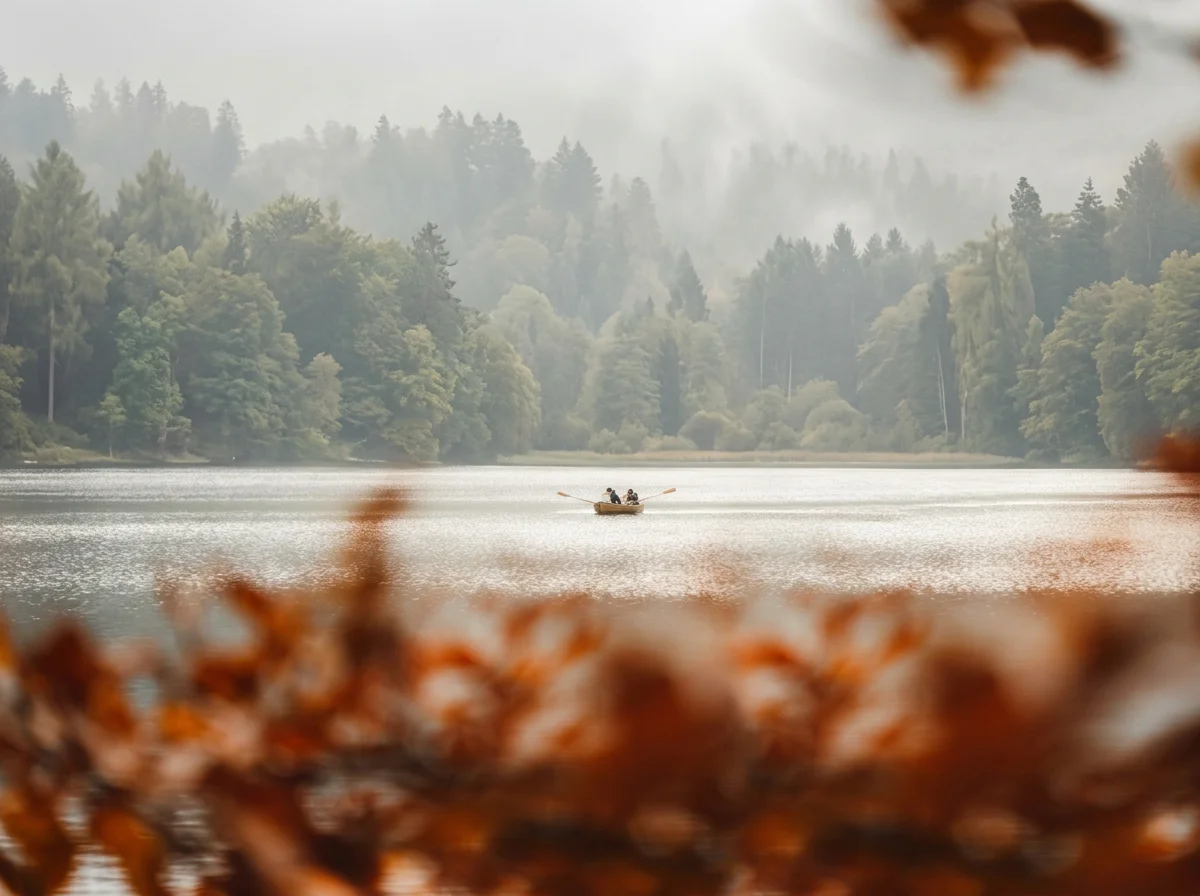
On the penultimate day, they rented a rowboat. Not really knowing where to go, they drifted near the shore, cradled by light waves and the gusts of an evening wind. They sipped cheap wine from a single bottle as if they were broke students again, rather than weary forty-year olds. Neither spoke in the fading heat, as if the brief holiday had drained all their strength. They stared at the white sailboats and the brushwood, blurred by streaks of sunlight that slid so slowly into the lake. Yet they clearly hadn’t escaped far enough; across the water floated the thump of music from the bars where the young, like fluttering moths, gathered around the lights turned on along the boardwalks. Every now and then, yachts glided past them, the dancers on board shouting and waving fiercely, as if requiring eyewitnesses to their good time. But they quickly fell silent, disappointed at the sight of the weary couple sitting with bowed heads just before twilight, as if they knew they were losing something.
2.
Hot asphalt, vibrant-colored lounge chairs, towels strewn along the golden beach. Blue toilets, red swings on the playground. The gray expanse of the lake and the dark jade depth of the forest. Every color here was oversaturated and intense; Simon noticed it as he stretched in the morning sun. Perhaps through squinted eyelids the world grew sharper still, gilded by the harsh glare of the sky mirrored in the water. Even the cars in the parking lot bled with vivid hues. The food shacks, their umbrellas and furniture haphazardly thrown together from salvaged pallets and painted in bright stripes. Bins overflowing with trash. The sharp scent of pines and smoky charcoal drifting from the grill, the sweet aroma of waffles, and bursts of pearly laughter. Voices, colors, and heavy scents tangled together, washing over him. Simon yawned wide, dragging a palm across his exhausted face. His head buzzed with the heavy ache of a hangover and lack of sleep. First thing in the morning, he had claimed a lounge chair set up on the shoreline and settled into it with a deep sigh of relief, knowing full well he wouldn’t find the strength to stand back up on his own. He smiled tenderly at the sight of his sister Marta splashing around with her girls in the shallow water. Every few moments, she would tug at her swimsuit as it cut into the pale, cellulite-heavy folds of her hips, as if that could somehow help. Long silvery lines of stretch marks, like scars healed long ago. With each child, more of them had surfaced. A sudden, bitter wave of emotion rose in his mouth. He took a sip, trying to wash down the taste, but the beer in his plastic cup was flat, warm, and far too pale, serving only to sharpen his desperate urge to drink.
3.
The heat set in by early afternoon, making even Simon’s eyelashes itch. Sweat trickled down his forehead, drying into the tiny hairs that clung to his skin, while his flesh stung from mosquito bites. A stifling, lazy silence hung in the air, heavy as the stillness before a storm, though there was no sign of rain. The sky was utterly cloudless, its golden sheen spilling across the water. Celia stood nearby in her white dress, looking like a solitary sail. She had forgotten her sunglasses and squinted against the light so hard that her entire face beneath her makeup puckered into a web of fine lines. Like a cracking clay mask, he thought, lounging drowsily in the sun. She waded into the water still wearing her flip-flops; perhaps she had simply forgotten they were on. She just stood there, letting the sun beat down on her, the light breeze wash over her. Summer had brought a flush of color to her cheeks, he noticed—new freckles scattered across her skin like a sudden splatter of paint from a brush. Her short, damp hair coiled tight over her forehead. Mechanically, she brushed it back and fumbled in her pocket for her cigarettes, looking exactly as if she were standing on their own balcony, sighing into the dusk. She wasn’t staring at the shimmering surface, but just above the water, straight into its blinding glare. He wondered if she had already told the others that she wanted to leave him. After all, those were the things women talked about among themselves on trips like this, he thought bitterly, before the buzzing in his head intensified. Simon sank deeper into the lounge chair, drifting off from pure, sweltering exhaustion. The water was already warm, and it seemed to him that the gentle ripples lapping against his feet were reaching closer now—as if the lake wanted to claim another scrap of land, dragging it down into its dark embrace. Evidently, she wanted to go blind, he thought sometime later.
4.
Marta’s girls were carrying toys and swim rings down to the beach. Pink flamingos and long-necked swans, looking like dead animals wrapped around their small, sun-browned bodies. The girls would charge into the water, splashing wildly, before pushing the children lying on the air mattresses—offering a sacrifice to the gods of the lake, a snack served on a plate. Simon rubbed his tired, dry eyelids and shifted on the lounge chair. The exact same rings were sold at the beach stalls, hanging in heavy bunches, already inflated like massive, colorful balloons. He remembered staring at them while waiting for Celia as she tried on sunglasses. He had complained that there was no point in buying cheap plastic without a UV filter just for a few days of vacation, but she still held them up to her face one by one, furrowing her brow, before putting them back. He used the same logic to convince himself against buying a ring, certain that in just a few days it would lie abandoned and caked in mud. Yet something drew him to those rings; perhaps he imagined swimming together with Celia like that. He would hold onto the edge of the ring and spin near her, unconcerned by the depth—just like the couples he observed drifting on mattresses in the middle of the lake, kissing and splashing, their joyful laughter carrying over the water. Like something from the past, a faraway echo.
5.
It felt strange to think of her that way: Marta, lanky and thin, with spindly legs and a ponytail that bounced to the rhythm of her stride. In school, she ran so much Simon barely saw her; evidently, she had to run away from a lot of things. And now he watched her from his blanket as she loudly slammed toys into a bucket. Nervous and restless, hunched low like a ruffled hen, she didn’t even try to shake off the children clinging to her. Where do they get all this energy? she had been asking desperately ever since they arrived, though no one answered her. Cotton candy! Ice cream! they screamed, their eyes frantically searching for the next attraction to fill the boredom. The aching, trembling rhythm of the late summer: he knew it all too well. It was a pity the children had learned it so quickly, he thought, watching them race down the boardwalk. They shouted by the cotton-candy cart, but the vendor ignored them. A lean, tanned torso. He was sunbathing on a low brick wall, reluctantly getting up only when adults stopped by the stand. With a sigh of relief, Marta sat down beside her brother to borrow a cigarette. I’m not buying them a thing, she muttered, leaning toward him. The vendor has a sweat stain on the back of his pants and scratches himself every few moments. And then he spins the cotton candy with that same hand. She grimaced, disgusted. Besides, it’s pure sugar. I’d rather just buy them another ice cream. And here they come running again. Where do they get so much energy? She groaned, falling back limply onto the blanket. Simon laughed and shrugged, though his sister was no longer paying attention to him. She stared up at the sky. It was strangely bright, radiant. He lay down with his head on her shoulder and closed his eyes, exactly like when they were children staring at the clouds, trying to find shapes in them, on those days when they wanted to run the furthest away.
6.
Marta had picked up swimming naturally back then, from all those times they went fishing. Simon, however, was terrified of the deep water. The lake, overgrown with greenery, seemed to watch him, as if blinking with a fringed eye. You’re not made of sugar. You won’t melt! his father would laugh as he tossed him from the pier. That must have been where this fear came from—relentless and choking—because Simon would cry, his arms flailing desperately, trying to come up for air. He would surface and flee, only to shiver in the reeds like a fish taken off the hook. A pale boy, as long as a pike, taking in air with desperate gasps. His father turned with his fishing rod against the sun, so his face remained invisible. His mother stroked his head, but he could feel that same shade of fear radiating from her, and disgust, its bitter scent. The terrifying uncertainty of whether he could ever defy his father. It was the same with the fish when his father gutted them with a short knife, holding the entrails, slippery and smooth, between his fingers. And the nights when he ordered the fire to be prepared.
7.
The kickboards had a gray film on them and made a whistling sound that gave Simon goosebumps. The whistles and shouting of the lifeguards. A strangely artificial blue water and the stench of chlorine that made his eyes sting, despite his plastic goggles. He loathed it, yet he was the one who had begged his father for swimming lessons. He listened to the instructions, did the exercises, and was doing quite well until it came to submerging. The moment he found himself beneath the surface, panic set in and his lungs tightened, as if squeezing his hammering heart. Finally the adults stopped forcing him. The lifeguard simply waved him off on the way to the locker room, and Simon never went back, even though the course was paid for the entire year. That day, he lost so much ground in his father’s eyes that he became smaller, shrinking further into himself. He had long since accepted that he would never measure up. Accepted, too, that he would never know that cool, soothing relief he had imagined swimming to be. But he was so busy, he told himself: he had so much work and he rarely thought about it, lately even less.
8.
It seemed to him that he had always drifted like this—helpless and powerless—carried through life wherever the current chose to sweep him. He stayed at the exact same job where he had started his internship and, though he detested it, he lacked the strength to learn something new. He didn’t think about children, and Celia didn’t mention it either, so it seemed only natural that they would grow old together in a stifling loneliness, in a rented apartment; they were in no rush to get a mortgage, deal with decorating, or argue with builders. They simply had no head for it. They didn’t build a life; they just settled for the one they were given. But he had always thought they would stick it out together. Now, when she wanted to leave, that same fear returned, choking him so tightly he couldn’t catch his breath. As if he were a castaway on the open sea, already starting to drown.
9.
The oversized swim ring with the tire print had seemed funny to him, but now, as he carried it across the beach, he had the impression that everyone was staring at him. Maybe I’m too old for this, he thought sadly, suddenly conscious of the slapping of his flip-flops and the tight swim trunks stretched over his pale, sweaty belly. To make matters worse, the swim ring was hissing. Maybe it hadn’t been inflated properly, or air was leaking from somewhere, he thought, turning back toward the cabin to grab the automatic pump. He found Celia and Marta lying in the shade of a tree beside a spread-out picnic. When he sat down beside them and plugged the pump into the ring, he was surprised by how loudly it whined; a few people nearby cast disgruntled glances his way. He took a slice of watermelon just to occupy his hands, but it was cloyingly sweet and the sticky juice glued his fingers together. He could have gone to the bathroom to wash up or for another beer, but he just sat there like a man serving time, sharing the misery of everyone else forced to guard their tiny scrap of shade. They all had silently surrendered to the noise, as if it were the mandatory price of relaxation, just like the hum of the motorboats and the shouting of the children leaping from the pier, though this forced relaxation only left them more exhausted. He was suffering, too, waiting for the ring to pump up, though it took so long that by now he hardly felt like swimming. He knew Celia wouldn’t want to go back into the water anyway. She cast a reluctant glance at the ring but said nothing, perhaps because her sunglasses kept sliding down her sweaty nose and she had to adjust them every few moments. She must have hated it, having bought massive, dark lenses that shimmered blue, like those of a fly or a dragonfly. He couldn’t see her eyes behind them and thought that she could start crying and no one would even notice the tears on her cheeks, because they would instantly dry up from the heat.
10.
It reminded him so much of their anniversary. The sugar one, their sixth. Sickeningly sweet, melting in the mouth with the aftertaste of rancid sunscreen and watered-down drinks. They had gone on only one trip together, which she bought for him as a surprise gift. Simon had completely forgotten about the occasion and then slept through the whole thing. He fell asleep on the beach the very first day after they arrived. Celia said he snored like a bear. She showed him photos where he slept prone, clutching the air mattress, and ones where she arranged seashells on his stomach, but somehow none of it ever woke him. Later, he would yawn groggily and rub his eyes. At breakfast, she would force strong coffee on him, but it didn’t help, because he was bored on the beach and felt so heavy, as if something there were suffocating him. Something in that humidity and the roar of the sea kept him sleepy all the time, his eyes closing heavily. He had been exhausted for so many years that he simply fell asleep like a massive, pale whale washed ashore. Only after sunset did he begin to wake up. She was already waiting for it, smelling of a fresh shower and tired from swimming alone. They strolled, holding hands, along the empty beach, ankle-deep in the water. He kissed her warm shoulder, where some sunscreen still clung, but she brushed off his jokes as if they were nagging flies. She shielded her face with her hand and turned sideways, as if she wanted to hide from him. She walked lost in thought, slower, and finally turned back, sometimes pressing her feet into the exact same tracks they had come by, as if to undo something. On the last day, they stood on the shore for a long time, staring silently at a sunset that wasn’t even spectacular. The colors didn’t spread over the water but a bit to the side, lingering as faded tones behind the high-rise hotels and rundown bars, blurring into the street’s roar and smog.
11.
A brief rain had undermined the castle the children had molded out of wet sand. Colorful molds, shovels, and sandcastles: everything looked like a sunken city now. Discouraged, the children had simply abandoned them. Simon waited until they left, and only then did he step into the water, adjusting the swim ring under his arm. Between his toes, he felt fine, cool gravel. Toward evening, the surface was cold and shimmering, like a mirror. For a while, he walked along the shore where boats still drifted and children splashed. He dipped his hands, then splashed his neck and shoulders to brace himself against the cold, and then slowly went deeper, almost to his knees. Right beside him, a girl floated past on a pink flamingo. Her mother walked behind her, telling her not to float out so far because the rubber might pop. What will you do when your feet can’t reach the bottom? she asked, but the girl paid her no mind and kicked her legs quickly, floating along the line of red buoys. I’ll drown, he answered the woman in his thoughts. A trail of white foam lingered behind her.
12.
He waded in up to his waist and waited until the water turned pleasantly warm, soothing. He rested his hands on the swim ring and paddled for a while, feeling the sandy bottom with his feet. Once he felt more secure, he lay across it and tried to swim. He stayed close to the shore, but the water here was too shallow and kept washing him back onto the beach. He knew he was in the children’s way, and those running into the water splashed him from every side. So, he pushed off hard from the pier and swam a bit further out. Now he grew bolder and clambered onto the ring to float, suspended in a pleasant languor. Above him was only a grayish sky and glints of sun. A light current nudged him along, but he noticed he was moving further from the beach. From this distance, it looked like a holiday postcard: yellow sand, colorful chairs and towels. The afternoon light lent it a delicately gilded glow, which somehow brought him relief, or perhaps it was the cool breeze. He rested his head and closed his eyes. He didn’t even notice how far he had drifted.
13.
He only snapped out of it when he bumped into a group of teenage boys. They were drinking in a circle, submerged up to their shoulders. Simon kicked his legs, trying to pull away from them, but he seemed to be getting nowhere, only churning up foam. When they began to protest, he embarrassedly admitted that he couldn’t swim, so they reluctantly gave him a shove. He knew how pathetic he must have looked in their eyes, so he thrashed his arms and legs blindly to float even further away. But now the current was stronger and caught him instantly. Simon tried to turn the ring around, but he kept drifting further out anyway, into the middle of the lake. He still had the boys and the people swimming near the shore within his line of sight, but he hesitated to call out to them, and they paid no attention to his awkward movements. Suddenly, he imagined a weary lifeguard who would have to swim out after him, then drag him back to the beach along with the ring. The whole awkwardness of the return path, the way people would stare at him. How Celia would look away. At the mere thought, Simon felt a surge of shame and slumped helplessly into the ring. For a long moment he drifted, pushed by the wind and a powerful current, and soon he was already too far. Even if he started shouting for help now, they wouldn’t be able to hear him. In a moment of shame, I lost my last chance, he thought with deep regret. He looked around, terrified. The shoreline seemed to dissolve into the heavy, post-storm gray. Around him was only water. A gray nothingness, full of trembling light. The distant rustle of trees.
14.
Once, she used to watch over him whenever he neared the lake. Even if he only dipped his toes, Celia would look up from her book every few moments, her eyes searching the ripples to see where he was. In a way, it had made him feel safe. But now Simon was alone; the girls hadn’t noticed him entering the water, and he was certain the lifeguards wouldn’t be watching for him—after all, there was nothing unusual about drifting on a swim ring, and no one knew he couldn’t swim. Celia wouldn’t even be surprised if he didn’t return for the night, since he had fallen asleep in the hammock before. He knew then that no one would look for him, or at least not anytime soon. I’ll drown, and nothing can save me, he realized with a piercing despair. He awkwardly rolled onto his stomach, gripping the ring tightly and clawing at the water with all his might. He kicked his legs, trying to recall the movements learned long ago in swimming lessons. He quickly tired, but he wasn’t moving at all. He tried a slower, more even rhythm, but that didn’t help either, so he gave up, letting his heavy body rest against the ring. The current was carrying him further out, but he could no longer fight it. He still hoped that one of the boats or the swimmers who sometimes ventured this far out with swim buoys tied to their wrists, would notice him. He tried to scan the surface of the water, but his vision was blurring. Finally, he spotted someone and jolted up, shouting and waving his arms, but that silhouette quickly receded, and Simon was left alone again. He imagined the dark abyss separating him from the bottom, and an icy shiver ran through him. How terrible to drown like this on the last day of vacation, he thought with bitter sorrow. He called out desperately for help, but it seemed to him that the water swallowed the sounds, scattering them instantly into the grayness until they vanished.
15.
A final thought came to his mind, one he held on to with all his strength. The thought that if they pulled him out, he could cling to Celia’s shoulder, just like in those sentimental melodramas, confess that he still loved her, and beg in a pleading voice for her not to leave. But he quickly cursed himself for this pathetic, mawkish helplessness, tried to push it as far away as possible—to forget about her, about himself, to forget about them. He squeezed his eyes shut in the fading light, blurred, forgetting. After all, he knew it didn’t matter in the least and would only embarrass her; she had made her decision long ago and nothing could change it now. It would only drag out the break-up, make it crueler, he thought.
16.
Beyond the boundary of the waves, the surface was calm, its face a dull mirror. Resigned, Simon lay on the ring, staring at the sky. It, too, was grayish, darker after the rain, mirrored perfectly in the lake, and occasionally he would dip his fingers to check where the border between them lay, so indistinct was the shift. His body was growing heavier and darker, or so it seemed to him. Or perhaps it was just the evening chill slowly rolling in. He had known for a long time that he would drown. It was only a matter of time, he thought with a bewildered smile. The ring seemed solid, but air had been leaking from it the entire time; even now, he could hear its faint hissing. It yielded slightly under his weight, and he knew it wouldn’t hold him for much longer; it would flatten until it lost its shape entirely. He imagined himself gripping that scrap of plastic tightly for long hours to come, until finally he drowned, simply slipping into the dark, icy water. For a long time, he would sink to the bottom in a ghostly, tense silence. But immediately after that, the faint rustle of trees would rise again, as if nothing had happened, nothing more than always.
JOANNA LECH
Joanna Lech is a Polish writer and poet, the author of five poetry collections and three novels. She has been nominated for Poland’s most prestigious literary awards, including the Nike, Silesius, and Gdynia. Her work appears in anthologies such as Scattering the Dark and journals such as Guernica, Two Lines, the Atlanta Review, and Sky Island Journal.