
A Literary Journal
Lost
A loser from the get-go, that was Alban Smythe. Almost sixty years old, beat up by life and beaten by the bottle, a loser like him was lucky to have any kind of roof over his head, considering what World War II had done to him. No running water or bathroom, just a one-hole privy behind the shack, but electric, at least—one bare bulb upstairs, one down. Twice a day Alban limped uphill among burdocks and thistles to fill two pails of water from the spigot attached to the side of the farmhouse. No complaints with the path in summer but in winter, especially when he was hot on the whiskey, it was pretty much a glorified otter slide.
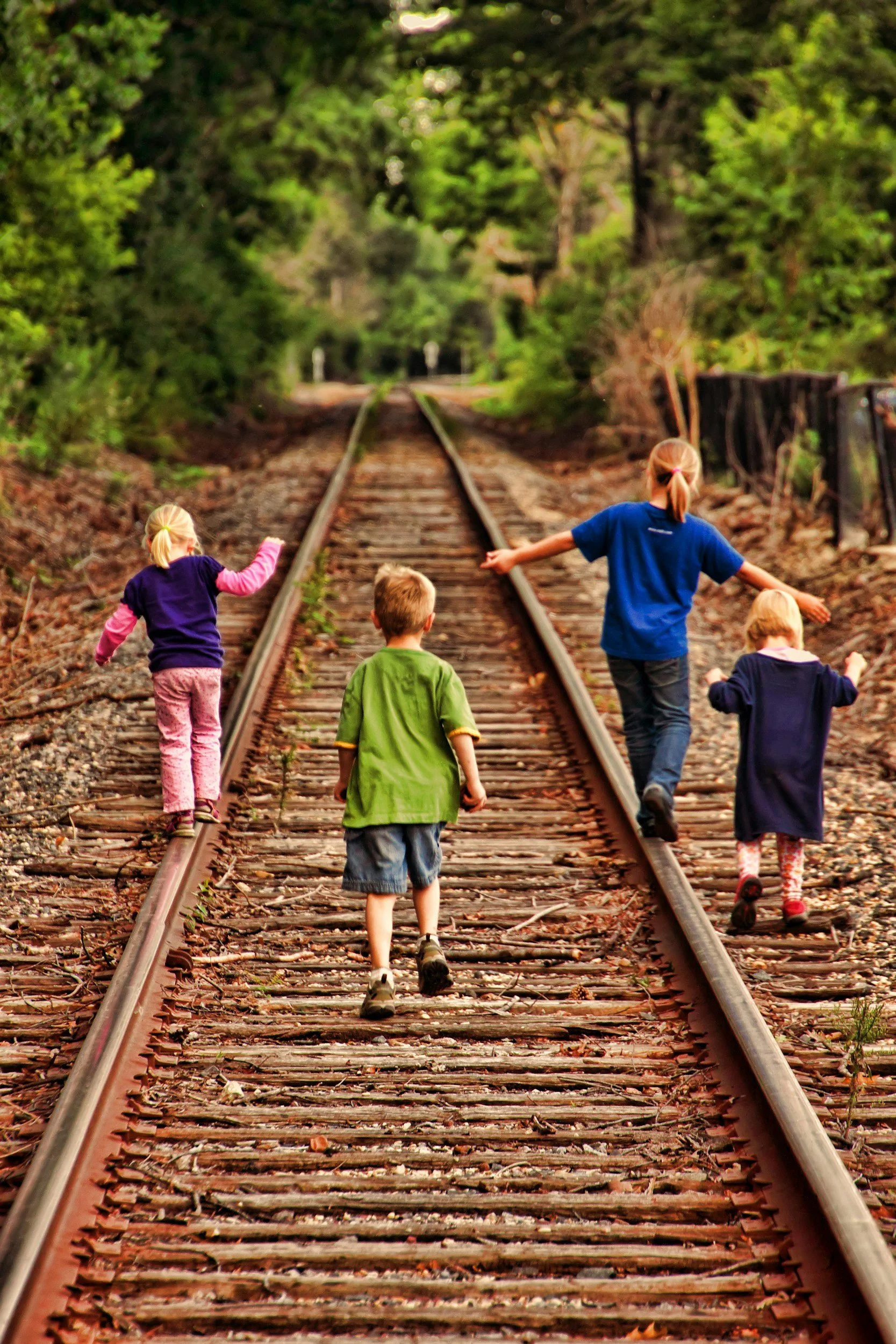
Didn’t matter to Alban about living ten yards from the Canadian Pacific Railway track, or not having wallpaper or insulation. He just kept pasting Louis L’Amour pages to the wall as fast he read them, because one thing made the little place a palace—the kids up the hill. Four of them, aged somewhere between five and nine, though his guesses weren’t much account. Every day Alban watched them running across the pasture or around the crabapple tree, playing tag or hide-and-seek, and he listened to the tee-heeing as they picked wild strawberries and daisies. Friendly, too, once they made his acquaintance. Alban grew real fond over the months and got used to their visits, dared say even came to rely on them to lift his spirits.
* * *
Even though it was suppertime, the land sweltered under the slant of the western August sun. Just as Alban set down his two pails and was about to twist the water faucet, a bead of sweat drizzled into his right eye. He stopped to swipe. That’s when he heard talking through the open kitchen window. A fox holler sounded, so hard it sprung memories of Mama blaming him that little Sissy perished in the woods even though Alban was only six and lost too.
Now it was the old woman barking, the grandmother. “You kids know better’n to go down there. You been told.”
“But Albie made marble cake and it was some good,” the middle girl piped up, for what it was worth.
“Did he hurt you? You know, touch ya?” the grandfather growled.
Then the voices of all four grownups, parents, and grandparents, sparked over each other, snapping anger, judgment, and fear, genuine fear that Alban would actually hurt those children. As if he could caution doing the … the filth they imagined.
How could the farm family think that? Alban wouldn’t harm a hair on their sweet baby noggins. Tears sprang to his eyes, not sweat tears, yet just as sudden and smarting, but he didn’t know if it was from sorrow or hurt. Fiery with shame, Alban turned and ran without getting one drop of water. He spent a long thirsty night quenched only by liquor.
* * *
In the days following, although Alban promised himself to send the kids packing if they showed up, no little sneakers, curly heads, or grubby cheeks appeared at his screen door. Not even once. From then on, no friends for Alban, except for feral cats, rollie cigarettes, and scotch. It was miserly comfort that the four still grinned and waved from a distance, sometimes whispered “Hey, Mister Albie” from the window above when he fetched water, their hushed tones confirming his status as outcast.
Half slogged between whiskey and sleep, Alban often drowned his heartbreak by remembering the kids’ first visit. Too shy to take the path, the three girls and the boy had trooped through the pasture, down along the chokecherry trees, and climbed through the page-wire fence just as he plunked a saucer of canned salmon and baked beans on his landing. Once the kids spied a fellow cat-liker, they abandoned any bashfulness. Like a snow squall, all at once the kids broke out—describing this cat or that, house or barn, their colors and mousing habits. From what Alban had seen, there must be at least two dozen fleabags roaming the place, maybe more. How did they keep them all straight?
“Wanna come in?” he asked before rightly thinking.
They nodded. A plump gray tabby and a skin-and-bones orange cat streaked in, too.
With his jackknife, Alban scraped one sardine out of a tin onto a cracked saucer and set it on the floor, saving the rest to go with saltines for his lunch. With a half grin, he spoke in the choky voice of one used mostly to thoughts. “You fellers sure tend a mean herd of cats on this farm.”
All four giggled, especially the two younger tanned and ringleted girls. The slightly taller one was an orangey blonde, not that different from the skinny cat really, not that different from Alban. But the youngest was a most striking creature with raven-gloss hair. Suddenly, without ceremony, Raven Hair snugged the orange striped piece of scrawn up to her belly. “This one here is Bicky-Bo.”
“Stupid name,” muttered the boy.
“ ’Tis not.”
The cat screeched as if offended, struggled from the girl’s arms, and leapt a good five feet, scrabbling for the bedroom upstairs, the loft that made the shack a two-roomer.
“Whoa, she’s slick as lightning,” Alban noted.
“Yup,” said the littlest one matter-of-factly. “Grammie says Bicky-Bo shoots through the house faster than a whore’s zipper.”
Her brother kicked her shoe hard. The oldest girl swatted her arm and said, “Quit the bad words, Noreen, or I’ll tell.”
Alban looked down. The fattest cat he’d ever known was nudging his foot, possibly trying to eat it. Although it clearly didn’t need it, he’d been feeding the gray lard pail for several weeks because he couldn’t resist. Cats just made such darn good company. “I think this monster gnawing my boot is my favorite fluff-fur so far. I’d lay a wager he weighs nigh to eighteen pounds. Whatcha call him?”
“Gray Snowie,” answered the raven-haired girl again, apparently the spokesperson for cats. “Grammie feeds him scraps behind Grampie’s back, then tells everybody that Gray Snowie’s fatter than the tit’s sister.”
Another kick came. Another scolding.
But faster than a whore’s zipper? Fatter than the tit’s sister? These were new ones on Alban. He was tickled. “Well, your grandmother sure does have a lot of expressions, now, don’t she?” Alban said. Then laughter bucked all the way up from his gut to his throat, in a manner it hadn’t done in a very, very long time. And it lasted.
After that, the kids, trailing two or three or four cats, took to calling regular, most afternoons. And Alban, whether he’d admit it or not, most likely not, looked forward to their visits, was even guilty of standing on his landing and hoping at times.
Then one day he got a notion. Although he wasn’t much of a cook, and how could he be, really, stuck with that ancient wood cookstove? Plus it must’ve been more than thirty years since he’d watched Carissa bake, watched her laugh in their tiny rented kitchen, nearly jigging over her first “married cake,” a marble cake. But, for better or worse, Alban held back some of his skimpy Army pension generally allotted to Doug’s Liquors and set off walking the four miles to Hartland to buy one yellow and one devil’s-food cake mix, vegetable oil, and eggs.
It felt important that the kids be there for the deed, so when they arrived, Alban mixed the ingredients in two dented aluminum pots he used in place of bowls. Then he portioned the goo into a rectangle pan. The kids, even Noreen, suddenly grew quiet as he carefully slashed a butter knife through daubs of chocolate and yellow batter, making it stripy. Then Alban slid the pan in the blackened oven and hoped.
“I ain’t never seen nothing like that,” said the oldest girl with a combination of awe and disappointment.
“Mummy doesn’t even know how to make tiger cake,” said Noreen, the youngest, with certainty.
Alban cooked the cake until it was springy as woods moss, then spooned lumpfuls with a dessert spoon onto four mismatched teacup saucers he used as plates, making sure it was cool before the kids tasted. Their eyes shone, really they did, and so did Alban’s heart.
* * *
Somehow those children had made everything he’d lost more bearable, the nights less aching, even when he couldn’t help remembering the thirtieth of the month no matter how hard he tried.
Carissa had been more than he deserved, that was for certain. Such soft cheeks with dimples right at the edge of her mouth, truly beautiful in spite of her palsy. He’d managed to court her with the few pennies he scrounged, once gaining great favor with Carissa’s huge family by delivering a forty-pound salmon he’d landed with borrowed tackle. Carissa’s bunch lived two miles out back, so St. John River salmon tasted a treat.
Having a young wife who was expecting made Alban stand tall in his boots, whether cutting lumber, picking rocks or potatoes, pressing straw, or any work to be cabbaged in the ’30s. But birthing was rough for the best of women, and no one could say Carissa hadn’t fought that brutal labor like a crusader, but a gallon of blood lost was a sight too much. And Alban’s darling wee boy, a blue pixie, had to be interred in Carissa’s cold coffin in late winter on the thirtieth day of the month just as the ground mushed enough to pickaxe a grave. That was the best worst thing Alban’s father and brother had ever done for him.
In 1939, with Carissa lost, everything frayed. What did the little town of Hartland, New Brunswick, have going? The St. John River was just another hurtful reminder of their evening walks on the shore, of that time he’d thrown a round rock and woke up a miracle, a three-piece fossil. So Alban joined the Army men. As a recruit on the way to Saint John, Alban finally got his first ticketed train ride instead of just hopping boxcars. He always loved trains. Growing up under his mother’s blameful shadow, he watched the CPR chuff by every day, waved to the cabooses, memorized engine numbers, counted the cars, and dreamed of leaving. Until Carissa, that is.
After basic training, Alban believed he was prepared for what he’d see in France and beyond, but no one talked about exploding brains, guts, and bones splattering on you, or the starving and dead women and children. The slack-skinned, potbellied kids tormented him most. Alban reckoned he knew hunger as a Depression kid, but no.
One dawn as the Canadians advanced in Holland under heavy mist, retreating Nazis blew up a dyke, swamping the land. Alban and his squad belly-crawled through muddy water that threatened to go bottomless at any minute. On toes and elbows Alban crawled like a bug, slithered like a worm, trying to breathe. After some time, maybe short, maybe long, suddenly everything seemed way too quiet. No familiar voices, no commands. None. Impossibly, the fog thickened. Panic. Alban had lost his buddies.
Then the shock of cold metal at the root of his neck and true panic. Seven months in a POW camp with interrogation—intentional. Smashed ankle—intentional. Inadequate treatment—definitely intentional. He was left with a gimp gait and a joke of a pension after the Army surgeon certified he was “fit.” Alban couldn’t say he was all that surprised. He’d lost his sister, lost his wife, his son, and his squad. Just one more loss for a loser.
* * *
But when Alban lost the best thing to happen in twenty-five years, those beautiful children who didn’t have a clue how to spit judgment or cunning, not an evil bone in their little … well, in their little bones, the swamp really took hold.
That fall, frost came early, with every leaf turned by Labor Day. As if the usual winter wasn’t bleak enough along the St. John River, this one never let up, with somber gray skies and the north wind wailing nonstop. Alban was alone except for his whiskey and smokes. Lonesomeness, he discovered, was a lot more fierce after knowing society. Alban moved his cot down by the wood fire, which never managed to throw enough heat. He constantly shivered. His mood froze, too, as packed, seething, and choppy as the ice clogging the river.
One morning, Rudolph appeared out of the woodwork, driving a red Mercury Comet. Alban hadn’t seen hide nor hair of his brother for a good five, maybe six years. Mama’s favorite came calling in a leisure suit, hair slicked up with Brylcreem, to invite Alban to find the Lord. Silently, Alban wondered if the Lord could be lost.
Rudolph made all kinds of promises for the good, and could be there was something to it all. Who was to say? But Alban was nobody’s fool. He rightly sensed snobbishness in the slight flare of Rudolph’s nostrils, the mild rise in his eyebrows, which he obviously worked hard to control as he looked around—smelling the enamel slop pail in the corner that passed wind even through the closed lid, maybe the smell of Alban himself, the pile of empty, crusty bean cans. But eventually Rudolph’s face let loose when his eyes landed on the empty hooch bottles.
“Brother, let us pray for redemption.” Rudolph dropped to one knee on the uneven softwood floor with suddenness and reluctance at the same time. Alban waited, staring down at the top of his brother’s head, so clean, so shiny, so young and pink compared to his old scratchy, flaked scalp, so different even though only two years parted them. With clenched jaws, Alban let Rudolph spill his piece, then shook hands with him, peaceable-like. After all, his brother had dug Carissa’s grave. Things like that count.
* * *
Late one afternoon in April, as the river ice began to break up and start to run, the thirtieth as it happened, Alban heard a commotion from the farmer’s dooryard and driveway. The whole farm family was outside, zipping about, acting frantic. The grandmother paced the front veranda, yanking her hair and crying. Three of the kids ran back from the barn, shaking their heads. The father, mother, and grandfather hustled down the driveway toward the railroad crossing, scanning the fields on either side.
A little tipsy, Alban yanked his good foot and his bad foot into boots and toppled out of his house. “What’s the trouble? What can I do?” Alban asked.
“Noreen!” screamed the mother, half at Alban, half to the gusty spring winds. “She’s lost!” Then she added, “Red coat,” as if Alban didn’t already know.
“Right. Don’t worry, I’ll get her,” he said stoutly. Alban knew a thing or two about being lost and he’d find that girl if it killed him.
The grandfather turned to Alban, jerked his thumb toward the shack. “And we’d better not find her in your place, Smythe.”
Alban just shook his head, but that made him so furious, he didn’t need to go back for his coat. His flannel shirt would do fine.
Tracking Noreen wasn’t easy. So many footprints in the mud and the dirty snowbanks left along the driveway where the kids had been sliding, tunneling, and making trips to and from the school bus. But Noreen was an odd little flower. Alban knew that. Like dandelion fluff, she often fluttered away from her brother and sisters.
Something, pure gut, sent Alban across the railroad tracks and down onto the road toward Hartland. For a good while he scoured the river side of the road for signs. He was about to turn back, because this was surely too far for little-girl wandering, when he spied small indentations in the old crumbly snow of the steep riverbank. Then his eye caught Noreen. A red coat and a tangle of raven-black curls crouched on the edge of the St. John River, now heaving with massive bergs, the grinding sound audible all the way up to the road.
Noreen had a stick in her hand, poking most contentedly at pieces of ice. But her footing was frozen slushy water, not land. It could shift any minute.
Alban careened over the sidehill, tumbling, sliding, and cursing. In the midst of his last stumble, frigid water swept Noreen away, red coat and all. Such a frail little gem, how long could she last? Without hesitation, Alban leapt into the river. He promptly lost the cigarette glued to his bone-dry lips. And he lost the flask that had been permanently pinned to his right hip since the war.
Shock of icy water. Pain from being pummeled. But Alban kept moving, wading, swimming against the crushing ice. He had to reach Noreen. She was floating away, face down, the back of her red coat puffy, inflated like a life vest. Somehow Alban found the throat strength to yell up the hill, “I found Noreen.” Then he shouted, “Don’t worry, honey, I’m coming.”
For ages Alban battled the shifting ice and freezing water, called on Carissa and called on God. And they answered. Finally, with lungs swamped and limbs exhausted, he embraced the girl and heaved them both onto solid land.
Stopped cars lined the road above them. The farm family and neighbors and gawkers watched, paralyzed. Alban fell back into the late winter snow—gray snow, like Gray Snowie the cat—and let the blue-lipped child drape his middle. Noreen’s father high-kneed it down the sharpish incline, grabbing up his limp, dripping daughter. Far, far in the distance, Alban heard the mother’s shrill cries, “Noreen, baby!” and “hospital” and “Turn the heater on high.” Then all sounds faded away.
The mushed snow enfolding him seemed soft, although Alban’s flannel shirt felt stiff, almost starched. He couldn’t feel below the hip. No crippling foot pain though, first time in twenty-five years. Alban reclined with the setting sun warming his face. Across the river and beyond the hills, scarlet and gold tiger streaked the sky, the colors of Carissa’s pretty paisley dress the day she baked the “married marble cake.” The wind, silent now, cold but not biting, fluttered a strand of wet hair on his forehead. Alban slumped deeper, feeling more peaceful. He shut his eyes.
ANGELA JOYNES
Angela Joynes is a disabled Canadian writer living in Tennessee. Her words have appeared in the West Trestle Review, Ilanot Review, National Flash Fiction Day Anthologies, Flash Flood, Susurrus Literary Journal, Trash Cat Literary, and Bright Flash Literary Review, among other places.